How Iran Conflict Is Transforming Emerging Market Economies Across the Globe
In this article
- Introduction
- Understanding Emerging Market Economies
- Overview of the Iran Conflict
- Impact on Global Oil Prices
- Trade Disruptions and Supply Chain Challenges
- Currency Volatility
- Foreign Investment Decline
- Impact on Regional Economies
- Food Security and Commodity Prices
- Government Policy Responses
- Opportunities Amid Challenges
- Long-Term Economic Implications
- Role of International Organizations
- Global Market Reactions
- Social and Economic Consequences
- Public Sentiment and Market Psychology
- Strategies for Emerging Economies
- Conclusion
Introduction
Global geopolitical tensions often ripple far beyond their immediate regions, shaping economic realities in ways that affect millions of people. One such ongoing issue is the Iran conflict, which continues to influence international markets, trade flows, and political alignments. While developed nations may have buffers to absorb such shocks, Emerging Market Economies tend to experience more direct and often severe consequences.
These economies, characterized by rapid growth, evolving infrastructure, and increasing integration into global trade, are particularly sensitive to external disruptions. From currency volatility to rising inflation and shifting investment patterns, the Iran conflict is having a multi-layered impact.
This article explores how the situation affects Emerging Market Economies, examining the mechanisms behind economic disruptions, regional variations, and long-term implications.
 Also readCash Flow Forecasting for Small Businesses: A Simple 13-Week Method That Prevents Surprises
Understanding Emerging Market Economies
What Defines Emerging Markets?
Emerging markets are countries transitioning from developing to developed status. These economies typically show strong growth potential but also face structural challenges such as limited institutional frameworks, political instability, or dependence on specific exports.
Examples include nations across Asia, Africa, Latin America, and parts of Eastern Europe. Their growing importance in global trade makes them key players in the world economy.
Why They Are Vulnerable to Global Conflicts
Unlike developed economies, emerging markets often rely heavily on:
- Imports of energy resources
- Foreign investment inflows
- Export-driven growth models
This dependence makes them highly sensitive to disruptions caused by geopolitical conflicts like the one involving Iran.
Overview of the Iran Conflict
The Iran conflict is not a single isolated issue but a complex web of tensions involving regional rivalries, sanctions, and international diplomacy. It affects critical global routes, especially oil supply channels, making it economically significant worldwide.
Key aspects include:
- Trade sanctions limiting Iran’s economic participation
- Regional instability affecting neighboring countries
- Fluctuations in oil production and distribution
These elements combine to create uncertainty in global markets, particularly impacting nations that are still developing economically.
Impact on Global Oil Prices
Rising Energy Costs
One of the most immediate consequences of the Iran conflict is the volatility in oil prices. Iran is a major player in global energy markets, and any disruption in its production or exports can trigger price increases.
For Emerging Market Economies, this leads to:
- Higher import bills
- Increased transportation costs
- Rising production expenses across industries
Countries that rely heavily on imported fuel face inflationary pressures that can slow economic growth.
Inflationary Pressures
When oil prices rise, the cost of goods and services also increases. This leads to inflation, which erodes purchasing power and affects everyday life.
Emerging markets often lack strong monetary tools to control inflation, making them more vulnerable compared to developed nations.
Trade Disruptions and Supply Chain Challenges
Interruptions in Trade Routes
The Iran conflict affects key maritime routes such as the Strait of Hormuz, a critical passage for global oil shipments. Any instability in this region can disrupt supply chains worldwide.
Emerging economies that depend on these routes for imports and exports face:
- Delayed shipments
- Increased shipping costs
- Reduced trade efficiency
Decline in Export Demand
Global uncertainty often leads to reduced demand for exports from emerging markets. As developed countries adjust their spending, emerging economies experience:
- Lower export revenues
- Slower industrial growth
- Job losses in export sectors
Currency Volatility
Depreciation of Local Currencies
Geopolitical tensions tend to strengthen safe-haven currencies like the US dollar. As a result, emerging market currencies often depreciate.
This creates several challenges:
- Increased cost of imports
- Higher debt repayment burdens
- Reduced investor confidence
Capital Flight
Investors tend to withdraw funds from riskier markets during times of uncertainty. This capital outflow leads to:
- Stock market declines
- Reduced liquidity
- Economic instability
For Emerging Market Economies, maintaining investor trust becomes increasingly difficult during prolonged conflicts.
Foreign Investment Decline
Reduced Investor Confidence
The Iran conflict contributes to global uncertainty, making investors cautious. Emerging markets, already perceived as higher risk, see a decline in foreign direct investment (FDI).
This affects:
- Infrastructure development
- Job creation
- Technological advancement
Shift Toward Safer Markets
Investors often redirect funds to more stable economies during geopolitical tensions. This shift limits growth opportunities for emerging markets and slows their development trajectory.
Impact on Regional Economies
Middle East and Neighboring Regions
Countries close to Iran experience the most direct effects, including:
- Trade disruptions
- Security concerns
- Economic instability
However, some oil-exporting nations may benefit from higher prices, creating uneven impacts within the region.
Asia and Africa
Many countries in Asia and Africa rely on imported oil. Rising prices strain their budgets and increase inflation.
Additionally, reduced global trade affects export-driven economies in these regions.
Latin America
Latin American countries face mixed effects:
- Oil exporters may benefit from higher prices
- Import-dependent nations experience economic strain
This highlights the varied impact of the Iran conflict on different Emerging Market Economies.
Food Security and Commodity Prices
Rising Agricultural Costs
Energy plays a key role in agriculture, from machinery to transportation. Higher oil prices increase farming costs, leading to:
- Expensive food production
- Higher consumer prices
- Increased food insecurity
Impact on Vulnerable Populations
In many emerging markets, a large portion of income is spent on food. Rising prices disproportionately affect low-income households, increasing poverty levels.
Government Policy Responses
Monetary Policies
Central banks in emerging markets may respond by:
- Raising interest rates
- Controlling money supply
- Stabilizing currencies
However, these measures can also slow economic growth.
Fiscal Strategies
Governments may:
- Provide subsidies for fuel and food
- Increase public spending
- Implement trade policies to stabilize markets
Balancing economic stability with growth remains a challenge.
Opportunities Amid Challenges
Diversification of Energy Sources
The Iran conflict encourages countries to explore alternative energy sources such as:
- Renewable energy
- Local energy production
- Energy efficiency initiatives
This can reduce long-term dependence on imported oil.
Strengthening Regional Trade
Emerging markets may shift focus toward regional partnerships, reducing reliance on global trade routes affected by conflict.
Long-Term Economic Implications
Structural Changes
Prolonged geopolitical tensions can lead to:
- Changes in global trade patterns
- New economic alliances
- Shifts in investment strategies
Resilience Building
Emerging markets may invest in:
- Stronger financial systems
- Diversified economies
- Improved governance
These changes can enhance their ability to withstand future shocks.
Role of International Organizations
Global institutions play a key role in supporting emerging markets during times of crisis. Organizations such as the International Monetary Fund and World Bank provide financial assistance and policy guidance.
For further understanding of global economic systems, you can explore this detailed overview on <a href=”https://en.wikipedia.org/wiki/Emerging_market” target=”_blank”>emerging markets</a>.
Global Market Reactions
Stock Market Fluctuations
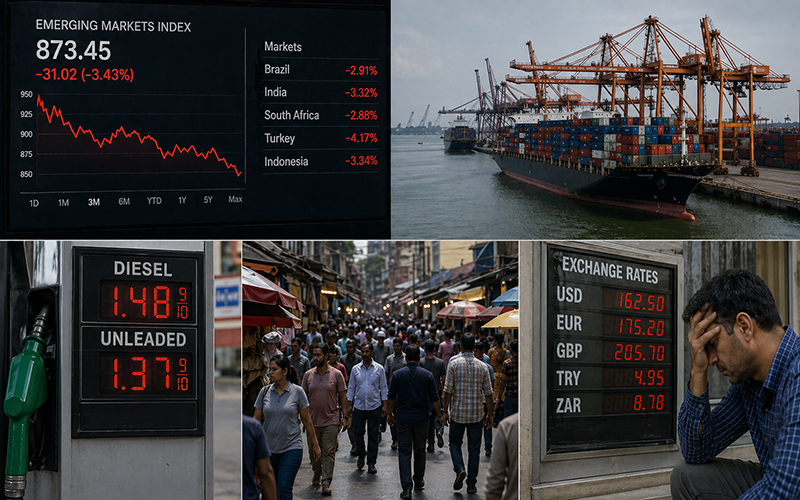
Global stock markets often react sharply to geopolitical tensions. Emerging market indices are particularly sensitive, experiencing:
- Increased volatility
- Declining investor confidence
- Reduced capital inflows
Commodity Market Shifts
The Iran conflict influences not only oil but also other commodities. For insights into how global markets respond, this analysis on <a href=”https://www.forbes.com” target=”_blank”>global economic trends</a> provides valuable perspectives.
Social and Economic Consequences
Rising Unemployment
Economic slowdowns lead to job losses, particularly in industries dependent on trade and manufacturing.
Increased Inequality
The impact of inflation and reduced growth often widens the gap between rich and poor, creating social challenges.
Public Sentiment and Market Psychology
Fear and Uncertainty
Geopolitical conflicts create uncertainty, influencing consumer behavior and business decisions.
Community Discussions
Public perception and discussions often reflect economic concerns. Platforms like <a href=”https://www.reddit.com” target=”_blank”>online forums</a> highlight how individuals and businesses react to global events.
Strategies for Emerging Economies
Economic Diversification
Reducing reliance on a single sector or export can help mitigate risks.
Strengthening Institutions
Improving governance and financial systems enhances resilience.
Building Strategic Reserves
Maintaining reserves of essential commodities can cushion against supply disruptions.
Conclusion
The Iran conflict is a significant geopolitical issue with far-reaching economic consequences. Its impact on Emerging Market Economies is complex and multifaceted, affecting everything from oil prices and trade to investment and social stability.
While challenges are evident, this situation also presents opportunities for growth, innovation, and resilience. By adopting strategic policies and embracing change, emerging markets can navigate these turbulent times and continue their journey toward economic development.

Get in Touch We welcome your feedback, inquiries, suggestions, and news tips. Whether you are a reader, advertiser, or business partner, our team is here to assist you. Email: businesstomark@gmail.com