
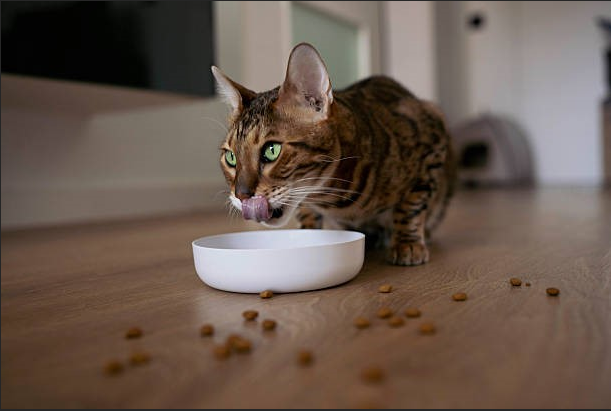
Buying food for a cat used to feel fairly straightforward: pick a familiar brand, choose wet or dry, and bring it home. Today, the cat food aisle looks very different. Shoppers can compare cans, pouches, kibble, age-specific formulas, specialty recipes, portion sizes, and foods designed around different feeding routines.
U.S. cat owners are also paying closer attention to what they buy. Some prefer the convenience of dry food, others regularly use wet food, and many households keep more than one format available.
So, what is actually changing, and what should cat owners pay attention to beyond the packaging?
The useful question is not whether wet or dry food is more popular, but why a particular format works for a particular cat.
How Cat Food Buying Is Changing in the U.S.
- Wet Cat Food Is Gaining More Attention
Wet food has become an increasingly common part of feline feeding in the U.S. According to PetfoodIndustry, wet food was used in 63% of cat-owning households in 2025, compared with 57% in 2019.
That does not mean dry food is disappearing. Instead, wet food is taking a larger role in a category where owners have more feeding options than they did several years ago.
Wet formats may appeal to owners because they provide food in portioned cans, trays, or pouches and naturally contain more water than dry kibble. They also come in different textures, including pâté, chunks, shredded meat, and foods served in gravy.
For shoppers, that creates more choice, but it can also require some experimentation. A cat may enthusiastically eat one texture and ignore another, even when the flavors appear similar.
- Dry Food Still Fits Many Everyday Routines
Dry cat food remains practical for many households because it is easy to store, portion, and serve.
It can also work well for owners who divide a cat’s daily food into several smaller meals or use part of the ration for enrichment activities. Dry pieces are easier to place inside many cat puzzle toys, treat balls, and foraging activities than moist food.
Convenience matters especially in multi-cat households, where owners may be preparing several meals each day.
However, easy serving should not turn into unlimited refilling. Feeding directions provide a starting point, but the appropriate amount can vary with the cat’s size, age, body condition, and activity.
- Owners Are Spending More on Feline Nutrition
Food remains a meaningful part of the cat-care budget.
APPA’s 2026 Cat Report found that U.S. cat owners spent an average of $337.53 on food in 2025, an increase of 9% from the previous year. APPA also noted that owners are increasingly using food and treats for nutrition, variety, convenience, and personalization rather than viewing them only as routine replenishment.
That helps explain why store shelves now include so many formats and specialized choices.
Still, a higher price does not automatically mean a food is the better option for an individual cat. Shoppers need to look past positioning and compare what the food is actually designed to provide.
What U.S. People Should Consider When Buying Wet or Dry Cat Food
- Check Whether the Food Is Complete and Balanced
Before comparing flavors or packaging, check the nutritional adequacy statement.
AAFCO explains that this statement identifies whether a food provides complete and balanced nutrition and which life stage it is intended for, such as growth, adult maintenance, or all life stages.
This matters because kittens and adult cats do not have identical nutritional requirements.
Owners should therefore check:
- Whether the product is specifically made for cats
- The intended life stage
- Feeding directions
- Calorie information
- Whether it is a complete diet, only a treat, or a supplement
A front label can be attractive, but the information on the back often tells the shopper much more.
- Think About the Cat’s Actual Eating Habits
A food only works if the cat can and will eat an appropriate amount of it.
Some cats prefer several small meals. Others are enthusiastic eaters who finish food immediately. Texture can matter as much as flavor, particularly with wet food.
Owners changing formats should pay attention to what happens after purchase. Does the cat consistently leave half a can behind? Does dry food disappear too quickly? Is a large package losing freshness before it gets used?
Buying habits often become more practical once owners understand the cat’s normal routine rather than choosing based only on what is popular.
- Compare Cost by How the Food Will Be Used
The cheapest package is not always the least expensive feeding option, and the highest-priced food is not automatically the most suitable.
Look at:
- Daily feeding amount
- Number of servings per package
- Storage after opening
- Food regularly left uneaten
- Whether the household feeds one or several cats
For wet food, smaller portions may reduce leftovers for cats that eat limited amounts at once. Larger dry-food packages may offer value in some households, but only when the food can be stored properly and used while fresh.
- Keep Feeding Products Practical
Food is only one part of the feeding setup. Bowls, storage containers, measuring tools, and cleaning supplies are basic cat essentials that can make daily feeding easier.
Bowls should be kept clean, and opened food should be stored according to package directions. Feeding areas should also be positioned away from litter areas when possible.
New bowls or other new cat products can improve convenience, but they do not replace checking the food label and monitoring how the individual cat responds to its diet.
Conclusion
The U.S. cat food market is giving owners more choices, with wet food gaining ground while dry food continues to fit many everyday feeding routines. The useful trend is not simply choosing one format over the other. It is becoming more thoughtful about what is being purchased. Life stage, nutritional adequacy, portion size, storage, cost, and the cat’s own eating habits all deserve attention. Good buying decisions begin with the individual cat rather than whichever package happens to stand out on the shelf.
FAQs
Is wet food automatically better than dry cat food?
No single format is automatically best for every cat. Both wet and dry foods can provide complete nutrition when appropriately formulated. Check the nutritional adequacy statement, life stage, feeding directions, and any individual dietary needs.
Can dry food be used in cat puzzle toys?
Many cat puzzle toys are designed for dry kibble because individual pieces can move through openings or compartments. Use part of the cat’s measured daily food rather than adding unlimited extra kibble purely for the puzzle.
What cat essentials are useful for feeding?
Useful cat essentials include appropriately sized food and water bowls, a food scoop or scale for measuring portions, and airtight storage where suitable. Wet food may also require covered refrigeration after opening, according to the manufacturer’s directions.
Should food be kept near a cat litter enclosure?
A feeding station is generally better placed away from a cat litter enclosure. Keeping feeding and toileting areas separate helps maintain a cleaner setup and gives the cat distinct spaces for different activities.
Should owners switch foods whenever they see new cat products?
Not necessarily. New cat products and food launches can be interesting, but novelty alone is not a reason to change a diet that works well. Any new food should first be checked for its intended life stage, nutritional adequacy, and suitability for the individual cat.