Is ChatGPT Information Reliable and Who Is the Current CEO of OpenAI
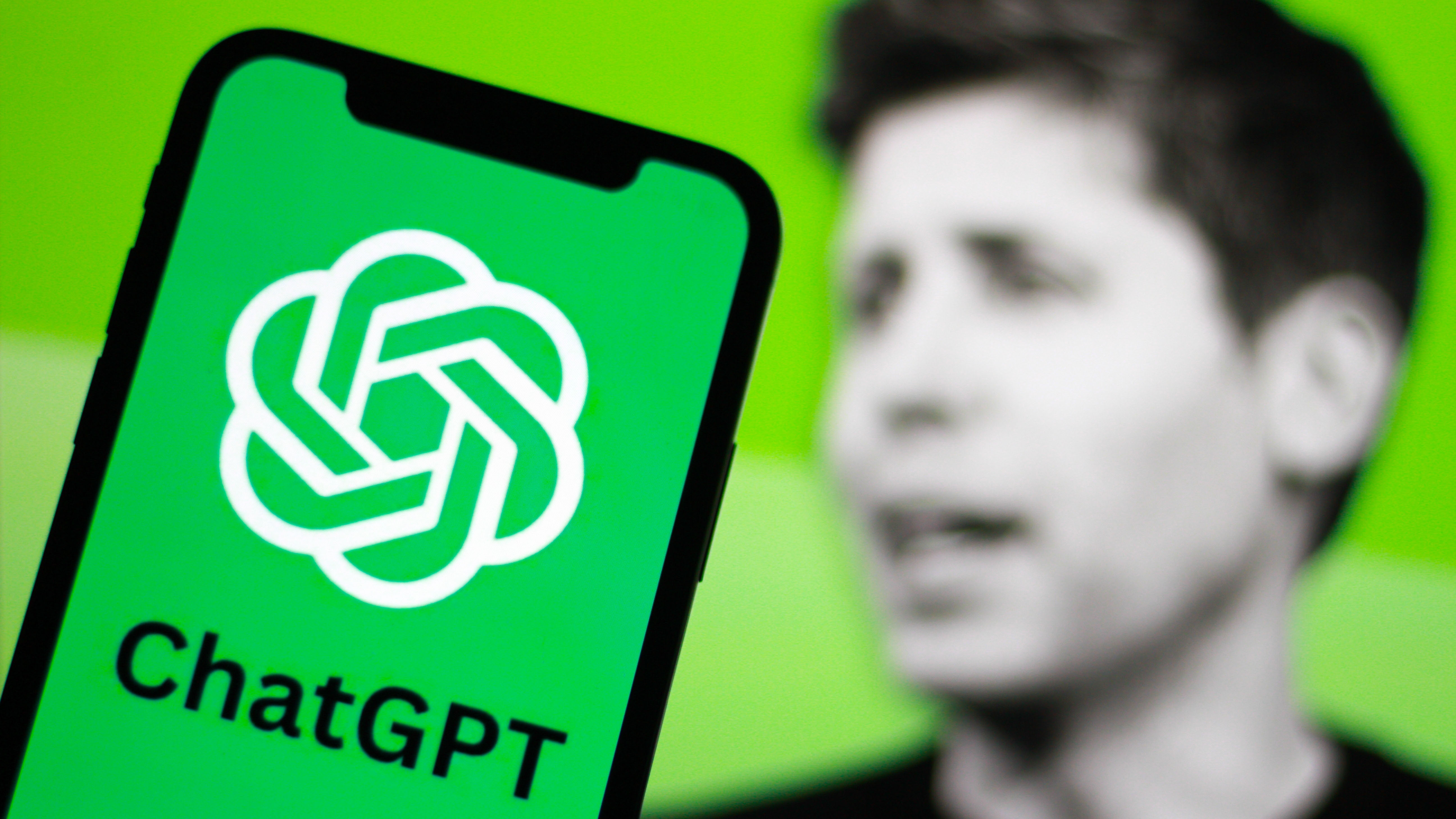
In an era where artificial intelligence shapes how we access knowledge, millions turn to ChatGPT daily for answers, explanations, and creative help. But a critical question remains: Is ChatGPT information reliable? And who leads the company behind this transformative tool?
This comprehensive guide examines the reliability of ChatGPT, its strengths and weaknesses, the leadership at OpenAI, and practical strategies to use it effectively. Whether you’re a student, professional, or casual user, understanding these aspects helps you harness AI responsibly.
In this article
- Who Is the Current CEO of OpenAI?
- Understanding ChatGPT: Capabilities and Evolution
- Is ChatGPT Information Reliable? The Core Issues
- Accuracy Statistics and Research Findings (2025-2026)
- Factors Affecting ChatGPT Reliability
- ChatGPT vs. Traditional Search Engines: A Practical Comparison
- Benefits and Drawbacks of Relying on ChatGPT
- Best Practices for Reliable Use of ChatGPT
- Expert Tips and Advanced Techniques
- Ethical Considerations and Responsible AI Use
- Future of ChatGPT Reliability
- Conclusion
Who Is the Current CEO of OpenAI?
Sam Altman serves as the CEO of OpenAI as of 2026. He co-founded the organization in 2015 and has led it since 2019, playing a pivotal role in the development and launch of ChatGPT in late 2022.
 Also readCash Flow Forecasting for Small Businesses: A Simple 13-Week Method That Prevents Surprises
Altman’s background includes dropping out of Stanford University, co-founding Loopt (acquired in 2012), and serving as president of Y Combinator. Under his leadership, OpenAI transitioned from a nonprofit-focused entity to a major player in generative AI, balancing innovation with safety considerations. He has navigated challenges, including a brief 2023 board-related departure and reinstatement.
As CEO, Altman emphasizes making AI beneficial for humanity while driving ambitious projects in reasoning models, enterprise applications, and infrastructure. His vision positions OpenAI at the forefront of the AI boom, with ChatGPT reaching hundreds of millions of users weekly.
Understanding ChatGPT: Capabilities and Evolution
ChatGPT is OpenAI’s conversational AI based on large language models (LLMs) like GPT-4o and newer iterations. It generates human-like text, answers questions, summarizes content, and assists with tasks ranging from coding to creative writing.
Key capabilities include:
- Natural language understanding and generation
- Multimodal features (text, images in some versions)
- Web search integration in advanced modes for fresher information
- Customization via custom instructions or GPTs
By 2026, models like GPT-5 show strong benchmark performance, scoring around 87% on MMLU Pro for general knowledge. Yet, reliability varies significantly by task and model version.
Is ChatGPT Information Reliable? The Core Issues
ChatGPT excels at many tasks but is not inherently reliable for factual information. It predicts probable text based on training data rather than retrieving verified facts, leading to potential inaccuracies.
What Are Hallucinations?
AI “hallucinations” occur when ChatGPT produces plausible but incorrect or fabricated information, such as nonexistent citations, wrong dates, or invented facts. Studies show hallucination rates for GPT-4 around 28-30% in certain reference tasks, with newer reasoning models sometimes showing higher rates in specific benchmarks (e.g., up to 51% in some factual QA tests).
OpenAI acknowledges this limitation: models can sound confident even when wrong.
Real-world example: Asking about a historical event might yield a well-written summary with one or two incorrect details if the query is niche or the model fills gaps probabilistically.
Accuracy Statistics and Research Findings (2025-2026)
Recent data highlights a nuanced picture:
- Strong areas: General knowledge benchmarks like MMLU show 87-88% accuracy for top models. Math and coding tasks often perform better.
- Weak areas: Factual Q&A (SimpleQA) can drop to ~49% accuracy with high hallucination rates. Scientific literature synthesis shows 28%+ hallucinated references.
- Improvements: Newer models reduce errors compared to GPT-3.5, but challenges persist in reasoning chains and less common topics.
A 2025-2026 analysis noted that while overall capabilities grew, hallucination rates in some advanced reasoning systems increased in specific tests.
| Aspect | GPT-3.5/GPT-4 Range | GPT-5 / Newer Models | Notes |
|---|---|---|---|
| General Knowledge (MMLU) | ~70-85% | ~87% | Strong performance |
| Factual QA Accuracy | Lower (~49%) | Improved but variable | High hallucination risk |
| Reference Generation | 28-40% hallucination | Better grounding | Still requires verification |
| Math/Reasoning | Variable | 90%+ in benchmarks | Stronger with tools |
Factors Affecting ChatGPT Reliability
Several elements influence output quality:
- Training Data Cutoffs and Updates — Base models have knowledge limits; search-enabled versions mitigate this but aren’t perfect.
- Prompt Quality — Vague prompts increase errors; specific, contextual ones improve results.
- Topic Complexity — Common knowledge is more reliable than niche, rapidly changing, or controversial subjects.
- Model Version — Paid tiers (GPT-4o, o-series) generally outperform free versions.
- Overconfidence — The model rarely says “I don’t know,” leading users to trust flawed responses.
Expert Tip: Always treat ChatGPT as a starting point or brainstorming partner, not a definitive source.
ChatGPT vs. Traditional Search Engines: A Practical Comparison
Traditional search engines like Google index the web in real-time and link to sources, allowing users to evaluate credibility. ChatGPT synthesizes information conversationally, which feels more natural but can obscure provenance.
Benefits of ChatGPT:
- Summarizes complex topics quickly
- Explains concepts in simple terms
- Handles follow-up questions contextually
Drawbacks:
- Potential for synthesized errors
- Less transparent sourcing (unless using search mode)
- Risk of outdated info without web access
Studies suggest Google often scores higher on quality and credibility metrics for health or factual info, while ChatGPT shines in synthesis and accessibility.
Real-world scenario: Researching a medical symptom? Use search engines for primary sources and ChatGPT to explain terms or organize findings.
Benefits and Drawbacks of Relying on ChatGPT
Benefits:
- Productivity boost: Users report saving 40-60 minutes daily on writing and research.
- Accessibility: Democratizes knowledge for non-experts.
- Creativity and learning: Excellent for tutoring, ideation, and drafting.
- Continuous improvement: OpenAI iterates rapidly under CEO Sam Altman.
Drawbacks:
- Hallucinations and factual risks
- Potential biases from training data
- Over-reliance may reduce critical thinking
- Privacy and data usage concerns
Comparison Table:
| Factor | Benefit | Drawback | Mitigation Strategy |
|---|---|---|---|
| Speed | Instant responses | May skip nuances | Combine with quick verification |
| Accuracy | High on common topics | Hallucinations on specifics | Fact-check key claims |
| User Experience | Conversational & engaging | Overconfidence | Ask for sources explicitly |
| Cost-Effectiveness | Free tier available | Advanced features paid | Use free for basics |
Best Practices for Reliable Use of ChatGPT
To maximize reliability:
- Provide Context: Include relevant details in prompts.
- Ask for Sources: Instruct the model to cite references.
- Cross-Verify: Check important facts against multiple trusted sites (e.g., Wikipedia, official sources, peer-reviewed papers).
- Use Iterative Prompting: Break complex queries into steps and refine.
- Leverage Search Features: Enable web search in ChatGPT for current events.
- Fact-Check Itself: Use techniques like masking or rephrasing to test consistency.
Actionable Advice for Beginners:
- Start with simple questions.
- Read responses critically.
- Verify names, dates, statistics.
- Use it for brainstorming, then research deeply.
Expert Tips and Advanced Techniques
- Chain-of-Thought Prompting: Ask the AI to “think step by step.”
- Role-Playing: “Act as a fact-checking researcher…”
- Custom GPTs: Create specialized versions for your needs.
- Combine Tools: Pair ChatGPT with Perplexity AI or traditional search for hybrid workflows.
Practical Example: Drafting a report? Have ChatGPT outline it, generate sections, then verify each claim independently.
Ethical Considerations and Responsible AI Use
Responsible use involves transparency (disclose AI assistance when appropriate), critical evaluation, and avoiding over-dependence in high-stakes areas like medicine, law, or finance. OpenAI, led by Sam Altman, continues investing in safety and alignment.
Future of ChatGPT Reliability
Advancements in reasoning models, better grounding with external knowledge, and user feedback loops promise improvements. However, complete elimination of hallucinations may remain challenging due to the probabilistic nature of LLMs. Expect hybrid systems that blend generation with robust verification.
Conclusion
ChatGPT is a powerful, innovative tool that offers immense value for learning, productivity, and creativity—but its information is not always reliable without verification. Under the leadership of CEO Sam Altman, OpenAI drives rapid progress while addressing challenges like accuracy and safety.
Key Takeaways:
- Use ChatGPT as a helpful assistant, not an oracle.
- Always cross-check critical information.
- Experiment with prompts to improve outputs.
- Stay informed about model updates for better performance.
By combining ChatGPT‘s strengths with human judgment and traditional research methods, you can use it safely and effectively. Approach AI with curiosity and caution, and it becomes a valuable partner in your information journey.
For more on OpenAI leadership: Sam Altman on Wikipedia.
Explore productivity insights: Forbes on AI Trends.

Get in Touch We welcome your feedback, inquiries, suggestions, and news tips. Whether you are a reader, advertiser, or business partner, our team is here to assist you. Email: businesstomark@gmail.com