How to Choose the Right DSQ Plate for Your Project
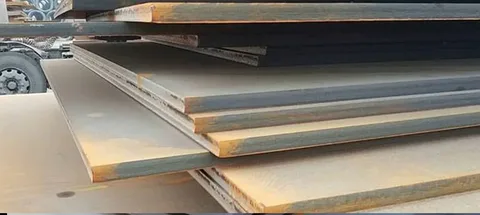
Selecting the correct steel plate for deep drawing, stamping, or forming work determines how a finished component performs under stress. A plate with the wrong grade cracks at the die radius or thins unevenly across the panel. DSQ Plate grades solve this through tight control on carbon content and grain structure, keeping the material soft enough to draw into complex shapes without splitting. Projects built on durable DSQ steel plates need that formability built into the base material.
In this article
What Are DSQ Plates?
A DSQ plate is a low-carbon steel plate rolled and annealed under strict controls for high formability. DSQ Steel Plates stands for Deep Drawing Quality, describing plates with a fine, uniform grain structure and consistent thickness. Carbon content, generally under 0.08%, keeps the material soft and cuts the risk of edge cracking. Conventional structural plates carry higher carbon and manganese for strength, making them stiffer in a deep draw. Drawing quality steel plates trade strength for elongation, the property that matters most on a press line.
Key Factors to Consider When Choosing DSQ Plates
Picking the right grade takes more than one spec sheet check. Each factor below affects press performance.
 Also readHow Early U.S. Couples Start Shopping for Engagement Rings Before the Proposal
Required deep drawing and forming capability
Draw severity sets the grade. A shallow pan needs less formability than a deep cylindrical part, so match the drawing rating to the actual die geometry.
Plate thickness and dimensions
Thickness affects drawability and tooling load. Thinner gauges form easily but may not hold the required strength once shaped, so confirm thickness against the structural need.
Mechanical properties
Yield strength, tensile strength, and hardness determine how the plate responds under the punch. A wide gap between yield and tensile strength gives smoother forming.
Ductility and elongation
Elongation percentage shows how far the metal stretches before failure. Higher elongation cuts the risk of tearing at sharp corners or deep flange areas.
Surface finish and quality
A clean surface avoids die galling and reduces friction in forming. Scratches, pits or scale transfer onto the finished part and weaken it at stress points.
Dimensional accuracy
The thickness and flatness tolerance will affect how evenly the blank sits in the die. The plates out of tolerance cause uneven metal flow, which causes wrinkling or thinning.
Application and fabrication requirements
Welding, machining, and secondary forming steps place different demands on the plate. Confirm early whether the part needs post-forming welds, since this affects grade choice.
Applicable ASTM, EN, or other standards
Standards such as ASTM A1008 or equivalent EN specifications set the baseline chemistry and mechanical limits. Ordering against a recognized standard keeps results consistent across batches.
Why Choose Deep Drawing Quality Steel Plates?
Deep Drawing Quality Steel Plates are built around high ductility and formability, so complex shapes come out of the press without cracking at corners or flanges. Thickness stays consistent batch to batch, mattering once a die runs across thousands of parts. The surface stays smooth enough to avoid galling against the punch. These properties suit the grade for tight radii and multi-stage forming.
Applications of DSQ Steel Plates
DSQ steel plates are used across automotive body panels, brackets, and structural components where complex press shapes are common. Electrical enclosures and appliance bodies rely on the same formability for clean corners without cracking. Storage tank heads and pressed industrial parts in general fabrication also draw on this grade. Wherever a flat blank must become a three-dimensional shape, this material family is the standard choice.
Common Mistakes to Avoid When Selecting DSQ Plates
Picking the wrong grade for the draw severity is the most frequent error, showing up as cracking mid-production run. Ignoring thickness tolerance is another issue, since small variations across a batch cause uneven flow in the die. Overlooking surface quality leads to galling and early tool wear. Buying plates without material test certificates leaves no way to trace a failure back to its cause.
How to Choose a Reliable DSQ Plate Supplier
A reliable supplier brings manufacturing expertise for drawing-quality grades, supported by quality testing and dimensional inspection on every batch. Material traceability is important, since a mill certificate should verify the exact chemistry and mechanical results for the supplied plate. Certifications to recognized standards, along with stock in common sizes, reduce lead time on urgent orders. Custom cut sizes and reliable delivery complete what a fabrication team needs. Champak Steel & Engg. Co. supplies DSQ plates from stock for drawing and forming work.
Conclusion
Formability, thickness, surface quality, mechanical properties, dimensional accuracy, and the specific application all shape how DSQ Plate fits a given project. Skipping any one of these during selection tends to surface later, usually as a cracked part or a failed batch on the press floor. Working through the specification and standard before ordering keeps the forming process predictable. Choosing the correct Deep Drawing Quality Steel Plate grade from the start supports consistent forming results and long-term reliability.

Covers business ideas, small business finance and technology for Business Recorder.