Top Benefits of Stellite Grade 1 Round Bars in Industrial Components
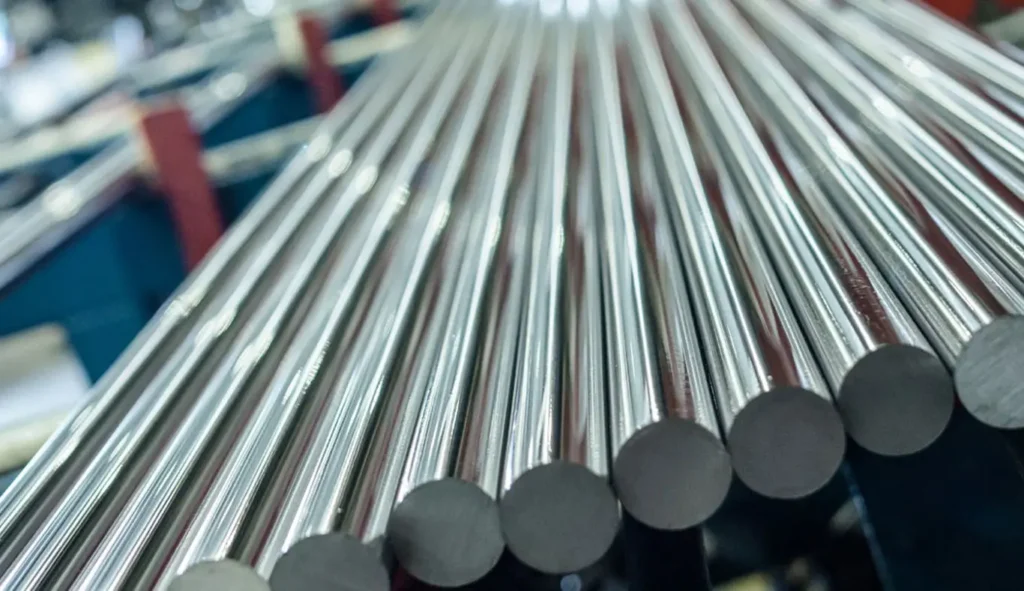
Cobalt forms the backbone of the Stellite Grade 1 alloy, setting it apart from ordinary tool steels. Chromium and tungsten carbides lock into the cobalt matrix, resisting wear long after conventional alloys thin down. Industrial components rarely fail from one overload; they fail from years of friction, heat, and oxidation wearing a surface down. Manufacturers machine Stellite Grade 1 round bar stock into finished parts or deposit the alloy through hardfacing, placing wear resistance exactly where a component needs it.
In this article
What Makes Stellite Grade 1 Round Bars Suitable for Industrial Components?
Stellite Grade 1 carries the highest carbon and tungsten content among standard Stellite grades: roughly 2.0 to 2.6% carbon, 11 to 14% tungsten, and 28 to 32% chromium. That chemistry builds a dense carbide network inside a cobalt-chromium matrix, giving an as-cast hardness of 52 to 58 HRC, higher than Stellite 6, 12, or 21. These Stellite Grade 1 properties hold under heat too: cobalt skips the phase transformations that soften iron-based alloys, so hardness survives past the point where hardened steel gives way. The alloy also resists galling and erosion from particulate-laden fluids.
Top Benefits of Stellite Grade 1 Round Bars
1. Excellent Wear Resistance
Hard carbides in the cobalt matrix resist abrasive wear, where hard particles cut across a surface, and adhesive wear, where contacting surfaces bond and tear under load. Bushings and wear rings under continuous friction hold their dimensions far longer than standard carbon steel, cutting the need for rework.
 Also readHow Early U.S. Couples Start Shopping for Engagement Rings Before the Proposal
2. Performs Well at Elevated Temperatures
Standard hardened steels lose surface hardness once temperatures climb past 300 to 400°C, because tempering reverses the heat treatment behind their strength. Stellite Grade 1 does not depend on that structure; its cobalt matrix holds hardness where steel softens, so equipment near furnaces or high-temperature process lines keeps its dimensional accuracy.
3. Good Resistance to Corrosion and Oxidation
Chromium above 28% forms a passive oxide layer on the surface, similar to the mechanism protecting stainless steel, combined with cobalt’s resistance to oxidizing atmospheres. Components exposed to steam, mild acids, or oxidizing gas streams resist degradation better than plain carbon or low-alloy steel, extending the service interval before replacement.
4. High Resistance to Galling and Seizure
Valve stems, guide bushings and mating shaft surfaces face constant risk of galling under repeated metal-to-metal contact, where surfaces roughen and can seize entirely. Stellite Grade 1’s carbide structure reduces that bonding tendency, so parts keep moving freely through repeated cycles.
5. Helps Extend Component Service Life
Wear resistance and temperature stability push back the point of premature failure. A valve seat that resists erosion holds its seal longer; a bushing that resists galling avoids the scoring that leads to early replacement, lowering maintenance costs and downtime.
Where Are Stellite Grade 1 Round Bars Used?
Valve seats and trim faces rely on cobalt alloy round bars for a hard, corrosion-resistant surface that seals through repeated cycling. Pump wear rings need the same protection against slurry and particulate erosion. Bearings, bushings, and shafts resist the galling and scoring that wear down untreated steel under sustained load. Cutting tools hold their geometry through abrasive contact instead of dulling quickly. Near combustion zones and thermal processing lines, equipment keeps its hardness where standard steel would temper back. Hardfacing deposits the alloy only where a component needs it, without machining the entire part from solid stock. Each of these applications shares one requirement: a surface built to outlast the material around it.
Why Choose Stellite Grade 1 for Demanding Components?
Compared with hardened tool steel, Stellite Grade 1 keeps its hardness where steel softens and resists galling where steel-on-steel surfaces tend to seize. Stainless steel forms a similar oxide layer, but Stellite Grade 1 delivers a harder wear surface without losing that corrosion protection. Cast iron wear parts wear faster under the same contact, pushing replacement schedules closer together. In continuous friction, high heat, or corrosive fluid, these Stellite Grade 1 industrial applications outlast all three on the failure modes driving replacement.
Conclusion
Stellite Grade 1 round bars give manufacturers a cobalt-based option built for the conditions that wear down conventional steel fastest: friction, heat, and corrosive exposure. From valve seats to pump wear rings to hardfaced shaft surfaces, the alloy’s carbide structure and cobalt matrix hold hardness and dimensional accuracy long after standard materials need replacement. This material remains a specified choice across valve, pump, and high-temperature equipment manufacturing.

Covers business ideas, small business finance and technology for Business Recorder.