Monel 400 Flanges: Features, Benefits, and Industrial Uses
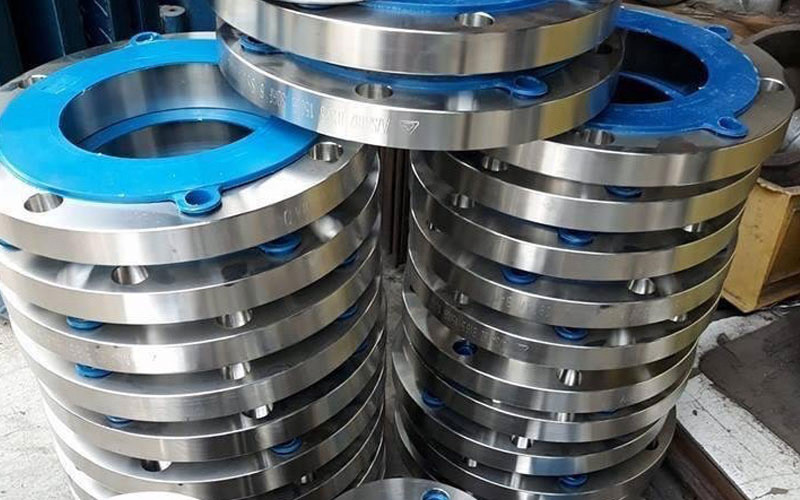
Carbon steel flanges do not last long in seawater, acid exposure, or high-pressure steam. A few operating cycles are usually enough to wear them down. Engineers in marine, chemical, and offshore plants deal with this regularly, and the flange material chosen often decides whether a system runs five years or twenty-five. Monel 400 flanges hold up better since the nickel-copper composition resists seawater, aggressive acids, and high temperatures in a way standard stainless grades cannot match. Nickel Copper Alloy 400 Flanges are manufactured and supplied to clients who cannot afford shutdowns caused by flange failure.
In this article
What Are Monel 400 Flanges?
Monel 400 Flanges are pipe connectors that are made from a nickel-copper alloy, which is approximately 63 to 70 percent nickel and 28 to 34 percent copper, and are registered under UNS N04400 Flanges. The blend provides strength and corrosion resistance not found in either pure nickel or pure copper. Small amounts of iron and manganese help the grain structure and toughness. The alloy keeps its properties from sub-zero temperatures up to around 480°C. Manufacturers work to ASTM B564 and ASME B16.5 standards, so dimensions and composition stay consistent batch to batch.
Key Features of Monel 400 Flanges
- It has excellent corrosion resistance. Handles hydrofluoric and sulphuric acids better than 316 stainless.
- The flanges provide outstanding seawater resistance. Pitting stays minimal with continuous immersion.
- Monel flanges have high mechanical strength. Tensile strength runs 550 to 690 MPa.
- It has good weldability. TIG, MIG, and shielded metal arc all work cleanly.
- It offers superior thermal conductivity. Useful for heat exchanger connections.
- It has resistance to acids and alkalis. Attacks the alloy far slower than carbon steel.
- It offers toughness at low temperatures. Impact strength holds up to minus 200°C.
- Flanges have a long service life. Offshore installations often run past 20 years.
- Monel flanges are reliable in aggressive environments. Alkylation and sour gas units run on this alloy.
Benefits of Using Monel Alloy 400 Flanges
- Equipment lasts longer. Wall thinning slows down, pushing replacement out by decades.
- Maintenance costs drop. Fewer inspections and repairs mean less spent on labour.
- Connections stay leak-proof. Gaskets stay seated since the flange does not warp under heat.
- Durability is high. Shock and pressure surges do not crack the alloy easily.
- Oxidation resistance is strong. A stable oxide layer keeps blocking oxygen after scratching.
- Operational safety improves. Behaviour under stress is predictable.
- Downtime costs go down. Fewer emergency repairs means fewer production losses.
- Performance stays consistent, whether the service is cryogenic or hot.
Types of Monel 400 Flanges
- Weld Neck Flanges: High-pressure lines needing full weld penetration.
- Slip-On Flanges: Easier to line up, good for low-pressure lines.
- Blind Flanges: Seal pipeline ends or vessel openings for maintenance.
- Socket Weld Flanges: Suited to small-bore, high-pressure instrumentation lines.
- Threaded Flanges: A bolt-together option where welding is not safe.
- Lap Joint Flanges: Paired with a stub end, useful for frequent dismantling.
Industrial Applications of Monel 400 Flanges
- Marine Engineering
Constant saltwater spray makes pitting resistance important.
 Also readHow Early U.S. Couples Start Shopping for Engagement Rings Before the Proposal
- Offshore Oil and Gas
Platform piping carrying sour gas needs sulphide stress cracking resistance.
- Chemical Processing Plants
Alkylation units using hydrofluoric acid keep running where stainless corrodes fast.
- Petrochemical Industry
Refining units handling sulphur-heavy crude benefit from the alloy’s stability.
- Heat Exchangers
Thermal conductivity plus corrosion resistance suits shell-and-tube connections.
- Power Generation
Coastal plants use it for condenser piping with brackish cooling water.
- Desalination Plants
Reverse osmosis systems need seawater-grade resistance throughout.
- Pulp and Paper Industry
Bleaching lines exposed to chloride compounds need this resistance.
- Aerospace
Fuel and hydraulic connections benefit from the strength-to-weight ratio.
- Food Processing Equipment
Non-reactive surfaces stop contamination in brine systems.
UNS N04400 Flanges do well here because chloride pitting, sulphide attack, and acid exposure sit within its resistance range.
Factors to Consider When Choosing Monel 400 Flanges
Start by matching the flange type, weld neck, slip-on, or blind, to your piping layout and site access. Pressure class and size need to line up with ASME B16.5 tables, or the bolt and gasket fit will not work. Operating temperature matters too. The heat treatment may need to be adjusted, as prolonged heating above 480°C can decrease the strength. Choose a grade, with special attention to corrosive environments, especially chloride levels. Ask for compliance documentation and mill test certificates. Check compatibility at joints between different metals too, since that is where galvanic corrosion tends to start. It also helps to work with a supplier who has proper quality assurance in place.
Maintenance Tips for Monel 400 Flanges
Inspect every six to twelve months. Catching surface pitting or gasket wear early stops small problems turning into leaks. Gasket selection matters just as much as the flange material, since a poor match compresses unevenly under pressure. Bolt torque should be checked against the manufacturer’s specified sequence, or the load ends up uneven. Clean the surface regularly too, salt deposits trap moisture against the metal if left alone. Ultrasonic thickness testing tracks wall loss before it nears the minimum limit. Preventive maintenance works best when built around actual operating conditions, not a fixed calendar. Installation matters from day one, since alignment and controlled bolt tightening set the tone for how the flange performs.
Conclusion
Monel 400 flanges are a practical answer for seawater corrosion, acid exposure, and thermal cycling, things that wear out standard flange materials quickly. That is why marine, offshore, and chemical processing industries keep specifying them. Go with certified Monel Alloy 400 Flanges from a supplier who can show verified material traceability, since that protects performance and safety over the flange’s working life.

Covers business ideas, small business finance and technology for Business Recorder.