
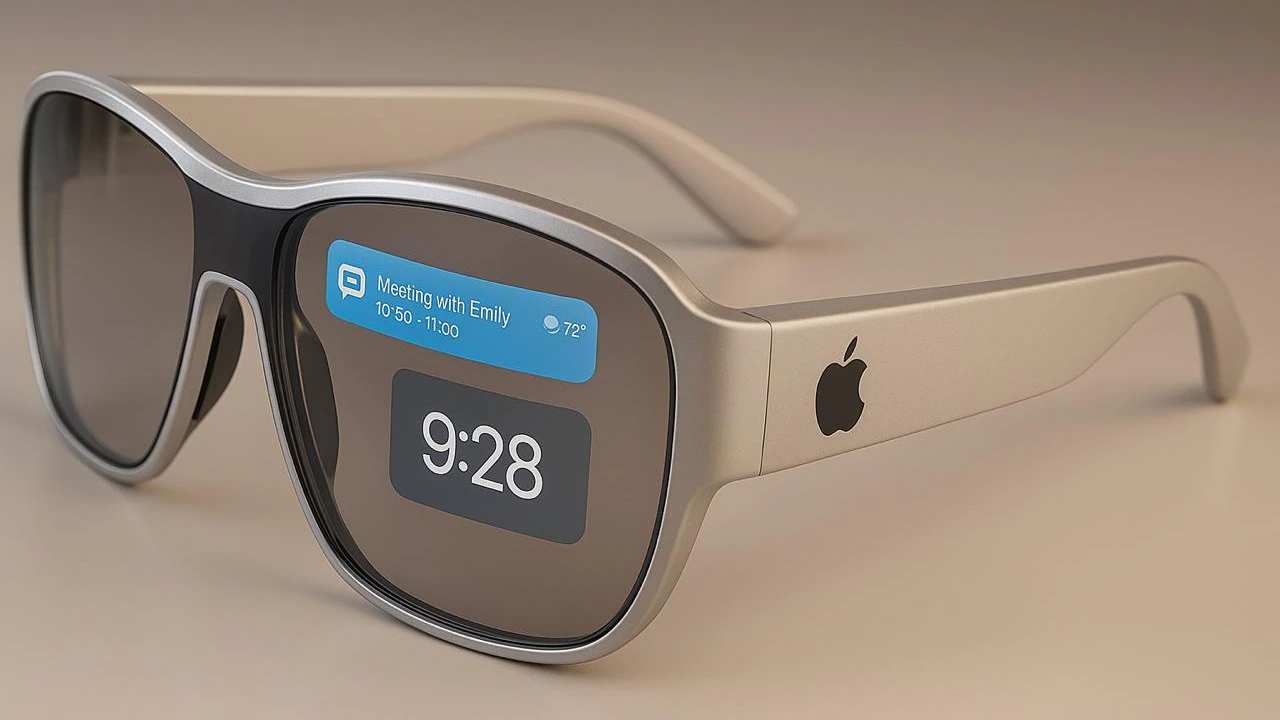
The technology world moves in cycles of whispers, leaks, and grand reveals. For years, the Cupertino giant has held the collective imagination of the tech community captive, not just with the devices in our pockets, but with the promise of the next frontier. While the world adjusts to spatial computing headsets, the conversation is shifting rapidly to something sleeker, more subtle, and potentially more revolutionary. The question burning through forums, analyst notes, and supply chain reports is simple yet monumental: Are we on the verge of seeing Apple AI smart glasses in 2026?
This is not merely a question of hardware specifications. It is a question about the future of human-computer interaction. We are moving beyond tapping glass screens. The next era is about ambient computing, where intelligence is layered invisibly over our perception of the real world. To understand if Apple AI smart glasses will materialize on our faces by 2026, we must dissect the patents, the technical hurdles, the competitive landscape, and the philosophical direction of the company itself. This is not a story of a product; it is the story of a paradigm shift that could redefine how we see reality.
From Wrist to Face: The Evolution of Wearable Intelligence
To predict the future, we must deconstruct the past. Apple’s journey into wearables did not start with a bang; it started with a heartbeat. When the Apple Watch was introduced, the world viewed it as a luxury timepiece. Apple viewed it as a biological sensor hub. Years later, the Watch is a life-saving device, a fitness coach, and a communication extension. This evolution provides a blueprint for the face.
The journey continued with audio wearables. The AirPods became a cultural phenomenon not just because they removed wires, but because they opened the door to a voice-controlled, audio-augmented reality. Siri moved from the phone to the ear, whispering directions, reading messages, and screening calls. This was the first true mass-market AI wearable. It trained us to trust an algorithm with our immediate sensory input.
Now, the eyes are the final frontier. The visual cortex processes information at a staggering speed. If a device can intelligently filter, augment, and annotate our visual field without obstructing it, that device becomes more essential than a smartphone. The realization of Apple AI smart glasses represents the ultimate convergence of the Watch’s biometric intimacy and the AirPods’ ambient intelligence. It is not a new gadget; it is the logical, inevitable progression of the Apple ecosystem into the physical world.
The Optical Acoustic Nervous System
Imagine a network of sensors and micro-haptic engines working in harmony. This is the nervous system likely underpinning the glasses. We are not talking about a screen strapped to your face displaying floating icons. We are talking about a system that uses bone conduction audio, discreet LIDAR scanners embedded in the temple, and inward-facing cameras that read micro-expressions.
The concept leans heavily on “silent communication.” Apple has patented systems where sensors detect motion in the jaw and vocal cords—sub-vocalizations—allowing a user to issue a command to Siri without uttering a sound. In a meeting, a subtle tap on the temple could trigger a visual overlay only you can see, showing the name of a person you just met, pulled from contextual AI. This is not science fiction; it is the specific engineering direction suggested by dozens of Apple’s public filings. The glue holding this optical-acoustic system together is a massively efficient on-device AI processor, likely a derivative of the A-series chips, capable of running large language models locally without draining a tiny battery.
The 2026 Crucible: Why the Timeline Makes Sense
Why is 2026 the focal point of the rumor storm? The answer lies in the physics of miniaturization and the rhythm of product development cycles. Spatial computing headsets, like the Vision Pro, represent the “lighthouse” technology. They are heavy, expensive, and overpowered for the living room, but they are a developer kit for the operating system of the future—visionOS.
The transition from a headset to lightweight glasses requires a “miracle of subtraction.” Apple needs to take the RoomPlan scanning, the gesture recognition, and the EyeSight display, and boil them down to their visual essence without the weight. Historically, this hardware miniaturization takes roughly three to four years from the moment a foundational platform ships. If Vision Pro defined the spatial software problem in 2024, the lightweight hardware solution is mathematically due for a reveal in late 2026.
The MicroLED Promise
A significant piece of the puzzle is display technology. Current OLED panels draw too much power to be constantly active in a small glasses frame. The industry consensus points to MicroLED as the breakthrough enabler. Unlike LCD or OLED, MicroLED emits its own light, eliminating the need for a backlight, drastically reducing thickness and power consumption while offering brightness suitable for sunny outdoor use.
Apple’s multi-billion dollar investment in a secretive R&D facility in Taiwan is heavily rumored to be focused on mastering MicroLED mass production. By 2026, the yield rates for these tiny, bright displays are expected to cross the threshold from “prototype” to “viable consumer product.” If Apple AI smart glasses launch without MicroLED, they might rely on a hybrid waveguide system projecting simple photon streams onto the retina—a heads-up display so minimal it almost disappears, relying instead on spatial audio and haptic pulses to convey data.
The Battery Density Code
The other side of the miniaturization coin is energy storage. Augmented reality AI processing is a thermal and electrical nightmare. You cannot strap a fan to sunglasses. The solution lies not just in bigger batteries, but in smarter ones. Apple’s silicon team specializes in heterogeneous computing—dedicating ultra-low-power cores to handle “always-on” AI tasks.
In 2026, the expected shift to stacked battery technology and 3nm+ or even 2nm chips will allow the glasses to run a distilled version of Apple Intelligence. The device won’t be generating 3D movies on the fly. It will be executing high-efficiency inference tasks: reading a street sign in a foreign language and whispering the translation, or identifying a plant from a minuscule visual patch. This is the “Glanceable AI” philosophy. You don’t consume content on glasses; you consume context. The 2026 launch window aligns perfectly with the maturity curve of these high-efficiency, low-power neural engines.
A Vision Through the Glass: The Design Philosophy
If history teaches us anything, it is that Apple will not release “computer glasses.” They will release glasses. The industrial design team, led by the most obsessive minimalists in the industry, understands that technology worn on the face is an intrusion, not a privilege. The primary design hurdle is not technological; it is social. Google Glass failed not because it was bad tech, but because it made the wearer look detached and, to outsiders, slightly menacing.
The design language for 2026 will likely draw from the iconic circular frames of a bygone intellectual era or the sleek, thick-rimmed acetate of modern fashion, concealing the machinery within the density of the frame itself. The arms will be slightly thicker, not to house circuit boards, but to house the linear actuators for the haptic engine.
The Tactile Interface
Touch input on a vertical screen is intuitive. Touch input on a glass surface hovering near your temple is awkward and socially weird. Apple knows this. The primary interface for Apple AI smart glasses will not be a touchpad. It will be a combination of a ring or a watch crown, and a high-bandwidth haptic feedback system.
Imagine a gentle tap on your right temple, perceptible only to you, signaling a right turn in navigation. A different pulse pattern signals a message from a VIP contact. This tactile language—what engineers call “rich notifications”—frees the eyes. The AI becomes a subtle guide, not a screaming billboard. The glasses will likely lack a physical button entirely, relying on pressure-sensitive stems (borrowed from AirPods Pro) that provide a fake “click” sensation via a Taptic Engine. This solid-state approach eliminates physical gaps, ensuring sweat and dust resistance.
The Intelligence Layer: Apple Intelligence in Your Eyeline
The hardware is merely the vessel; the soul is the intelligence. In the WWDC keynote, Apple introduced “Apple Intelligence,” a deeply integrated, privacy-first AI stack. The 2026 glasses will be the ultimate test bed for this architecture.
Consider the problem of navigation. Current map apps lock you into a 2D top-down view or a disorienting 3D third-person perspective. With AI glasses, the navigation becomes first-person and semantically aware. “Turn left at the big red brick building with the flower shop” is a human instruction. Apple Intelligence can parse the visual field, identify the red brick building using on-device semantic segmentation, and place a subtle, glowing golden thread on the pavement in your exact field of view.
The Semantic Reality Distortion
This is where the concept separates from standard AR. It’s not just overlaying a static text label. It’s understanding the physical relationship between objects. The AI needs to understand physics on a common-sense level to be useful. It needs to know that a glass of water is perched on the edge of a table and a slight nudge might spill it—and subsequently guide your attention away from it if you’re moving too fast.
This level of spatial reasoning requires the “Large Action Model” approach. Apple’s research papers suggest a move toward models that can predict not just the next word, but the next physical state of an environment. For the wearer of Apple AI smart glasses, this means an interface that understands what you are trying to do. If you are staring at a broken appliance, the glasses don’t just show a search button; they identify the model via a subtle glance at the back sticker, download the schematic, and project a glowing overlay on the specific screw you need to remove first.
On-Screen Awareness vs. World Awareness
-
Current AI: Reads text on a screen.
-
Contextual AI: Reads text in the real world and translates it live.
-
Spatial AI: Understands the 3D volume of a room and anchors digital sticky notes to physical furniture.
-
Predictive AI: Notices you pick up a prescription bottle and glances at your Apple Watch health data to log your medication intake. This is the silent, ambient computing that defines the 2026 vision.
The Competitive Reality: A Race Without Runners
The market is not standing still. Meta, in partnership with Ray-Ban, has already proven that there is a voracious appetite for smart glasses that don’t look like a sci-fi prop. The second-generation Meta Ray-Bans succeeded where a decade of tech giants failed, purely because they prioritized style and a low-friction AI assistant (voice and camera) over a complex AR display.
However, Meta’s approach is fundamentally a camera-first, cloud-dependent device. Apple’s historic angle is almost certainly going to be sensor-first and local-first. Where Meta excels in social media integration and live streaming, Apple will likely position their glasses as a privacy shield. The phrase “What happens on the glasses, stays on the glasses” could be the unofficial mantra. A visual processing unit that analyzes everything locally and throws away the raw data immediately is a compelling differentiator in an age of surveillance anxiety. If Apple can offer a world of augmented information without the existential dread of a cloud-based recording button pointed at everyone you meet, they will win the moral high ground.
The Audio-Only Trojan Horse
There is a high probability that the 2026 launch is a “warm-up” model—an audio-centric smart frame. It’s a strategy that de-risks the brand. Imagine a set of glasses that looks identical to classic Wayfarers but carries the computational audio prowess of AirPods Pro 2. Adaptive Audio, Conversation Awareness, and Personalized Spatial Audio that adjusts based on head tracking.
By calling this audio-only device a “Smart Glass,” Apple acclimatizes the public to wearing computers on their faces without the “creepy camera” stigma. Then, a year later, the visual overlay incrementally appears. This is the same “hobby” approach they took with the original Apple TV. First, you put a microphone and a brilliant audio pipe on the face. Then, you slowly phase in the visual cortex. The Apple AI smart glasses narrative might, therefore, be a phased rollout—a Trojan horse of sound, with the light following silently behind.
The Visual Assistance Ecosystem
How do you justify the existence of a visual display that isn’t a full immersive portal? By tying it to utility that makes you feel empowered, not distracted. The concept of “Visual Intelligence” has already been seeded with the iPhone 16’s Camera Control button. Pointing the camera at an object triggers an AI search. The glasses bypass the step of taking out the phone.
The killer app is not a floating YouTube window. It is visual assistance for the visually impaired and the mainstream user’s momentary confusion. Magnification is the simplest form of this. Dynamic contrast is the next step—imagine the glasses detecting you walking from bright sunlight into a dark subway, instantly adjusting the tint of the lenses not just for UV protection, but to digitally brighten the shadows so your visual acuity doesn’t drop.
Health Monitoring Through the Retina
A hidden driver for the 2026 launch is the health sensor pack. The eye is the only externally accessible part of the central nervous system. New patents suggest a system of multiple invisible wavelength illuminators projecting light onto the retina and measuring the reflection and absorption patterns.
This isn’t just eye-tracking. This is spectroscopy. The system can detect the density of macular pigment, an indicator of cognitive stress. It can track micro-saccades (the tiny, involuntary jumps your eyes make) to detect fatigue or intoxication far earlier than a motor-skill test.
Suddenly, the glasses are not a screen; they are a non-invasive medical lab. They can predict a migraine aura before the headache hits, warning you to take medication. They can monitor blood glucose trends through the aqueous humor of the eye without a needle prick. This turns Apple AI smart glasses into a regulated health device, moving the conversation from “tech luxury” to “health necessity,” a space Apple dominates with the Watch.
The Privacy Paradox: Seeing Without Recording
The elephant in the room is the camera. Society has not yet developed the etiquette for face-worn cameras. Snap Spectacles and Google Glass faced public backlash for their potential for surreptitious recording. Apple’s challenge in 2026 isn’t the AI; it’s the social contract.
The technical solution lies in the distinction between “looking” and “recording.” Apple’s design likely uses an optical processing unit that acts as a transient visual cortex. The camera stream exists only in a volatile memory buffer. The AI “sees” the stop sign to alert you, but the system never writes the video of the street to non-volatile memory unless explicitly and forcefully told to do so by the user, accompanied by a distinct, hardware-enabled recording indicator light visible to the public.
The Indicator of Trust
An elegant solution involves an outward-facing status indicator that uses a physical light pathway—not an LED that can be covered with tape, but a light that bleeds through the structure of the frame itself, signaling when the optics are actively interpreting the scene. For the glasses to succeed, they must signal “I am looking for you,” not “I am recording you.” The AI needs to be polite. If you are looking at a person, the privacy zone could automatically blur their face at the hardware level before the visual data even hits the operating system, replacing it with metadata (“Friend,” “Stranger,” “Shopper”) while preserving the anonymity of the subject. This hard-coded privacy is the only path to mainstream acceptance, and it is the moat protecting Apple from the regulatory nightmares facing less discrete competitors.
The Development Crucible: Technical Hurdles Remaining
While 2026 is the target, the road is littered with silicon shards. The thermal envelope is punishing. A pair of corrective glasses sits millimeters from the skin. Even a 3-degree Celsius rise is perceptible and uncomfortable. Apple’s thermomechanical engineering team must channel heat out through the front hinges, away from the skin. The use of titanium frames isn’t for aesthetics; it’s a thermal strategy, dissipating heat into the air over a large surface area.
Lens alignment is another nightmare. Human eyes have varying interpupillary distances (IPD). A waveguide display must project light directly onto the fovea. In a headset, you can mechanically adjust IPD. In thin glasses, physical adjustments add bulk. The solution is a software-defined display where the projection angle shifts via motorized micro-mirrors, calibrated instantly by the inward-facing sensors. The factory calibration for this, customized to the 0.1-millimeter accuracy of your pupil’s center, is a logistical marvel that only a company with total vertical integration and in-store fitting capabilities can manage. This is classic Apple—solving a messy hardware problem with expensive, proprietary software calibration, effectively killing the “one-size-fits-all” competition.
The Siri Reformation
The final pillar is the voice assistant. Current Siri, while improved, is still transactional. For glasses, the AI needs to be contextual and continuous. “What’s the car’s mileage?” must imply a glance at the odometer. “Remind me about this” must capture the article you are scanning.
This requires a massive leap in on-device semantic indexing. Apple’s 2026 AI model, likely running on a dedicated “Optic Nerve” processor, needs to maintain an attention graph. It doesn’t just listen for a wake word; it maintains a low-resolution awareness of your gaze vector. If you are reading a menu for five seconds, the glasses may pre-load the nutritional information for the top three items without being asked. This “zero-query” interface—where the device serves you information before you ask—is the holy grail. It requires such deep integration between the silicon and the software that only a closed ecosystem can deliver it. It is the reason Apple AI smart glasses cannot simply be a third-party accessory; they must be a primary node in the ecosystem.
2026 and Beyond: The Dawn of Ambient Computing
If the stars align—if MicroLED yields stabilize, if the thermal envelope holds, and if the “zero-query” AI behaves with grace rather than annoyance—2026 will be remembered as the year computing vanished. We are not looking at a product launch; we are looking at the final dismantling of the barrier between information and intuition.
The first generation of Apple AI smart glasses will not be a jack-of-all-trades. It will be a master of visual simplicity. It will excel at three things: navigation, notification triage, and health sensing. It will replace the compulsive need to glance at the iPhone screen 200 times a day. By moving the first glance of information to the natural gaze, the device will paradoxically reduce screen time, fulfilling the wellness narrative Apple has been crafting for years.
The glasses become the great filter. They shield you from the algorithmic noise of the phone, serving only the signal. A tap on the wrist from the Watch, a whisper in the ear from the AirPods, and a shimmer of light on the lens from the Glasses—this trinity forms a mesh of ambient computing. You live your life, and the technology steps back, whispering only when it is sure you need to listen.
The Cultural Shift
The final piece of the 2026 puzzle is cultural readiness. After a global trial with generative AI in text and image form, the world is becoming accustomed to synthetic intelligence. The initial shock of “deep fakes” is giving way to a nuanced understanding of digital literacy. By 2026, the public might be ready to accept an AI that edits the world for them in real time, provided the filters are human-centric and privacy-focused.
We will stop asking “Is this real?” and start asking “Is this useful?” Apple’s glasses will likely ship with a distinct spatial aesthetic—perhaps a glass-morphism design language that makes digital objects look like transparent, ethereal prisms rather than solid cartoons. This aesthetic subtlety is key. It respects the reality of the wall behind the notification. It does not demand; it suggests. It is this humility in design that will determine whether the glasses become a staple or a cautionary tale.
The launch of Apple AI smart glasses in 2026 is not just a supply chain rumor. It is a necessity for the ecosystem. The phone is maturing. The watch is saturated. The face is the last place left to explore, a territory rich with biometric data, visual attention, and intimate AI potential. The question is not if it will happen, but whether the world, and the silicon, is ready for the gravity of the vision.