How to Start a Vending Machine Business: Costs, Locations and the Profit Math
Thinking about a vending machine business? Learn startup costs, how to find profitable locations, how to calculate real profit per machine, and the mistakes that sink beginners.
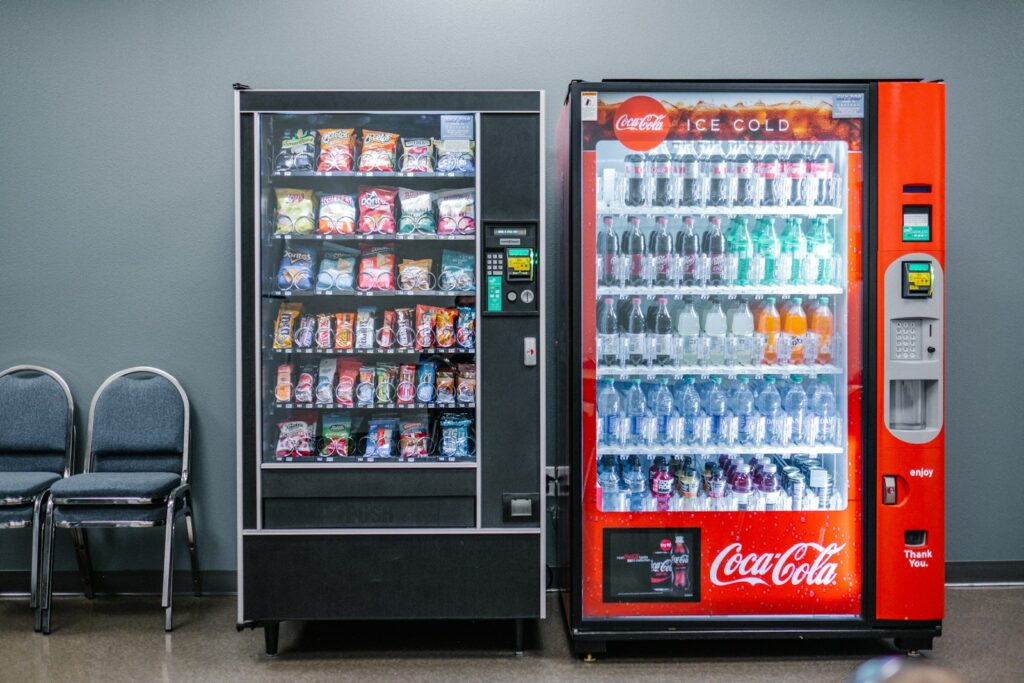
Vending machines have a reputation as the ultimate “passive income” business. Buy a machine, stock it with snacks, collect cash. The reality is more interesting: vending can be a solid small business, but the money comes from location choice, product mix and route efficiency, not from simply owning machines. Plenty of beginners buy equipment first and discover later that their spot sells four drinks a day.
This guide breaks down what it actually takes to start a vending machine business: the real startup costs, how to find and negotiate good locations, how to calculate profit honestly, and the mistakes to avoid.
In this article
- How a Vending Business Makes Money
- Types of Vending Machines
- Startup Costs to Budget For
- How to Find Profitable Locations
- The Profit Math: An Honest Example
- Choosing Products That Sell
- Running the Route Efficiently
- Cashless Payments and Smart Machines
- Common Mistakes to Avoid
- Is a Vending Business Right for You?
- Frequently Asked Questions
- The Bottom Line
How a Vending Business Makes Money
The model is simple. You buy products wholesale, sell them at a retail markup through a machine, and share a commission with the location owner if one is agreed. Your profit per machine depends on four things:
 Also readHow to Write a One-Page Business Plan: A Simple Template for Busy Founders
- Foot traffic: how many people pass the machine each day
- Captive audience: whether people have other options nearby
- Margin: the difference between your cost and selling price
- Operating costs: restocking time, fuel, repairs, card fees and commissions
A machine in a busy workplace with no nearby shop can outperform ten machines in quiet locations.
Types of Vending Machines
| Type | Typical cost range | Notes |
|---|---|---|
| Snack machine | Low to mid | Good margins, long shelf life |
| Cold drink machine | Low to mid | Steady demand, needs power and cooling |
| Combo (snack + drink) | Mid | Ideal for smaller locations |
| Fresh food / healthy | Mid to high | Higher prices, more spoilage risk |
| Coffee / hot drinks | Mid to high | Great margins, more cleaning |
| Speciality (PPE, phone chargers, toys) | Varies | Niche, location-dependent |
Exact prices vary widely by country and by new vs refurbished equipment. Refurbished machines from reputable dealers are a common, lower-risk way to start.

Startup Costs to Budget For
- Machines: new or refurbished; the biggest upfront cost
- Card and mobile payment readers: plus monthly service and transaction fees. Cashless payment often lifts sales significantly
- Initial stock: enough to fill each machine twice
- Transport: a suitable vehicle, or rental and delivery for moving machines
- Business registration, permits and insurance: requirements vary by city
- Telemetry (optional): remote monitoring that shows stock levels, so you only visit when needed
Before buying anything, map out your cash needs month by month. A simple 13-week cash flow forecast is perfect for this, because it shows when money goes out for equipment and when sales start coming back in.
How to Find Profitable Locations
Location is everything. The best spots usually have:
- 50+ people on site daily, such as staff, students, patients or visitors
- Long stays: workplaces, hospitals, gyms, car service waiting rooms, laundromats
- Limited nearby alternatives: no shop or canteen within a short walk
- Odd-hours activity: night shifts, warehouses, 24-hour facilities
Strong location ideas
- Factories and warehouses with shift workers
- Office buildings without a canteen
- Hospitals, clinics and waiting areas
- Gyms and sports centres (water, protein snacks)
- Car dealerships and service centres
- Apartment complexes and hostels
- Colleges and coaching centres
How to pitch a location
Approach the manager with a short, professional offer: free installation, regular restocking, a modern card-enabled machine, a product range tailored to their people and, if needed, a small commission. Emphasise convenience for their staff or customers, not your profits. Get the agreement in writing, including commission, power supply, access hours and how either side can end it.
The Profit Math: An Honest Example
Here’s an illustrative example. Your numbers will differ, so plug in your own.
- Average sale price: 150 (in your currency)
- Average product cost: 80
- Gross margin per sale: 70
- Sales per day: 25
- Monthly gross margin: 25 × 30 × 70 = 52,500
Now subtract monthly costs:
- Location commission (10% of sales of 112,500): 11,250
- Card fees and telemetry: 4,000
- Fuel and restocking time: 6,000
- Spoilage and repairs allowance: 3,000
Estimated net profit per machine: about 28,250 per month, before paying yourself for your time and before any loan repayments on the machine.
Change “sales per day” from 25 to 8 and the same machine barely breaks even. That’s why testing locations matters more than anything else.

Choosing Products That Sell
- Start with proven bestsellers: popular chips, chocolate, biscuits, water and soft drinks
- Tailor to the location: energy drinks for night shifts, healthier snacks for gyms and hospitals
- Track sales by slot and replace the slowest 10–20% of items every month
- Watch expiry dates and rotate older stock to the front
- Buy wholesale from cash-and-carry stores or distributors to protect margins
Running the Route Efficiently
As you grow, your profit depends on how efficiently you service machines. Group locations geographically, restock on a schedule driven by sales data rather than habit, and use telemetry so you never drive to a machine that’s still 80% full. Many operators find that a dense route of 10–20 machines in one area is far more profitable than the same number scattered across a city.
Cashless Payments and Smart Machines
The vending industry has changed a lot in the last few years. Card readers, mobile wallets and QR payments are now standard in many markets, and industry bodies such as the National Automatic Merchandising Association regularly highlight cashless adoption and remote monitoring as key trends. For a new operator, this matters in three ways:
- Higher sales: customers without cash can still buy, and average spend often rises with cards.
- Less cash handling: fewer collections, lower theft risk and easier bookkeeping.
- Better data: sales by product, time and day help you fine-tune stock and visit schedules.
When comparing machines, check whether they support a modern payment reader and telemetry, even if you start cash-only. Retrofitting old machines can cost more than buying a compatible refurbished model in the first place.
Common Mistakes to Avoid
- Buying machines before securing locations
- Believing “passive income” claims: vending is light work, not no work
- Cash-only machines in places where people mostly pay by card or mobile wallet
- Ignoring maintenance: a broken machine quickly loses the location’s trust
- Overpaying commissions on low-traffic sites
- Not tracking per-machine profit, so losers hide behind winners
Is a Vending Business Right for You?
Vending suits people who like systems, don’t mind physical work and enjoy optimising numbers. It scales gradually: one good machine funds the next. It’s less suitable if you want hands-off income or can’t reach locations regularly. For more low-cost ideas, browse our Business Ideas section.
Frequently Asked Questions
How many vending machines do I need to make a full-time income?
It depends entirely on location quality and your costs. Some operators need 15–20 machines, while others with excellent sites need fewer. Start with one to three and learn your real numbers.
Should I buy new or used machines?
Refurbished machines from a reputable dealer with a warranty are often the best value for beginners. Avoid very old models that can’t take card payments.
Do I need a licence?
Many areas require business registration, and some require permits or food-handling compliance, especially for fresh food. Check with your local authority.
How often do machines need restocking?
Busy sites may need weekly or even more frequent visits. Quiet sites might need restocking every two to four weeks. Telemetry helps you schedule visits precisely.
The Bottom Line
A vending machine business can be a genuinely profitable, scalable side business, if you treat it as a location business first and an equipment business second. Secure strong sites, track profit per machine, keep payment options modern and service your route efficiently. Do that, and each good machine becomes a small, steady income stream that funds the next one.

Covers business ideas, small business finance and technology for Business Recorder.