What Are Triply Circles and How Are They Used in Cookware Manufacturing?
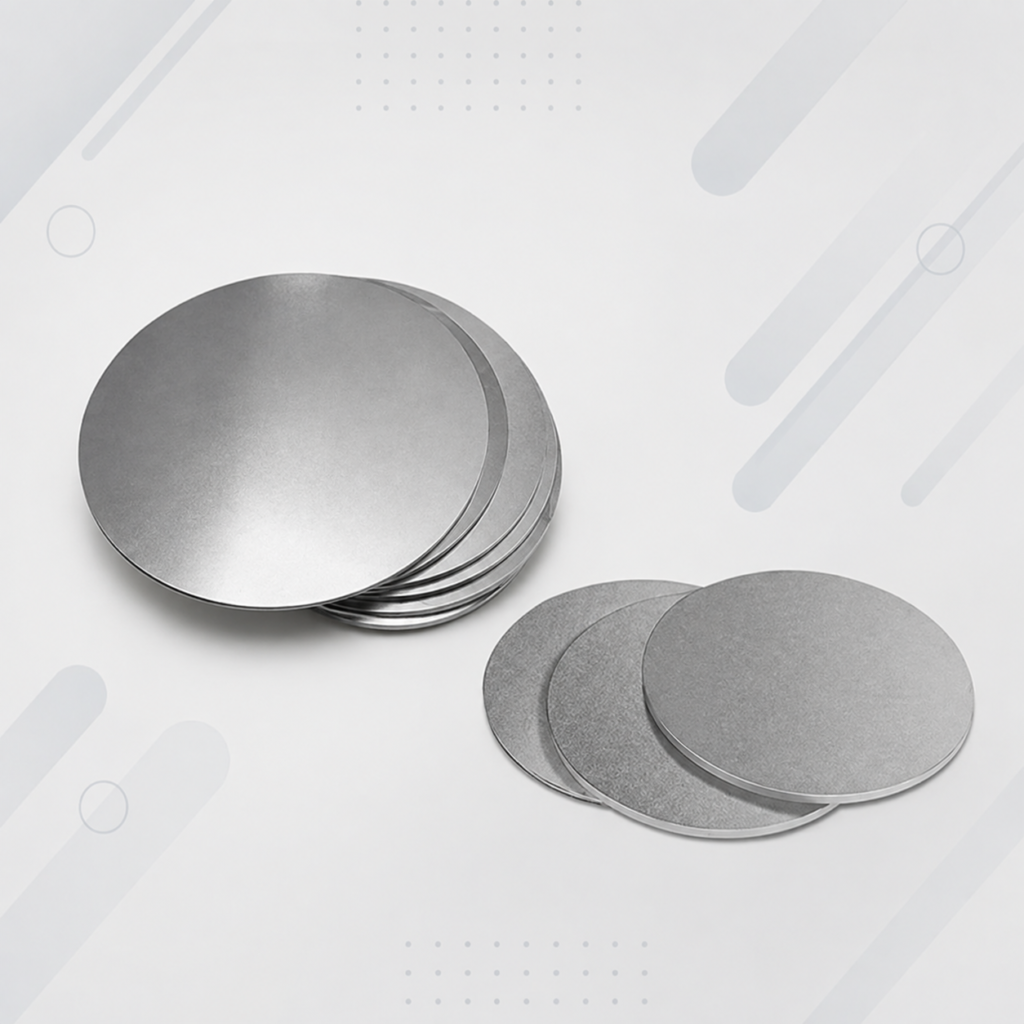
Cookware buyers expect pans and pots that heat evenly and hold up to daily stovetop use. Manufacturers meet that demand with metal blanks engineered for heat performance, not plain single-layer sheets. Triply circles are one such component, circular multi-layer blanks built from three bonded layers that combine the strength of stainless steel with the heat spread of aluminum in a single disc used to press and form cookware.
In this article
What Are Triply Circles?
A triply circle is a round metal blank made of three layers pressed and bonded into one piece. “Triply” refers to this structure, usually stainless steel on the outer sides with aluminium sandwiched in the middle. The layers bond under pressure and behave as a single sheet. Circular shapes suit cookware manufacturing since pans, pots, and kadais start from round blanks, unlike an ordinary stainless steel circle, which carries only one metal.
How Are Triply Circles Made?
The manufacture process begins by selecting the suitable metal layers for cookware. Usually, food-grade stainless steel and aluminum of the same gauge are used. Each layer is properly cleaned to remove oxidation before stacking. The stack is then bonded together under high pressure and controlled heat, fusing the layers into a single piece. Rolling makes the sheet uniform in thickness. Blanks are cut to size and checked for bond strength and surface finish. The same checks are applied to Stainless Steel Triply Circles and other clad metal circles before dispatch.
 Also readCash Flow Forecasting for Small Businesses: A Simple 13-Week Method That Prevents Surprises
Why Are Triply Circles Used in Cookware Manufacturing?
The primary reason for triply construction in cookware is aluminum’s thermal conductivity. It distributes the heat more quickly and evenly over the base, minimizing hot spots. Stainless steel protects the surface from corrosion and dents. Put together, the two metals cover each other’s weak points. Bonded layers hold up over years of use without delaminating across gas, electric, and induction cooktops, which is why triply circles for cookware have become a standard base material for pan and pot production.
How Are SS Triply Circles Used to Manufacture Cookware?
The blank is cut and inspected then goes to forming. This is where the shape is set into the final cookware body.
Frying Pans
Flat blanks get pressed or spun into shallow, wide profiles, giving a base that heats fast and evenly.
Saucepan Bodies
Deep drawing pulls the flat circle into a cylindrical shape, forming the walls and base in one seamless piece.
Cooking Pots
Larger diameter blanks get drawn into deeper vessels, where the aluminium core keeps the base responsive to heat.
Kadai
The blank is spun into the curved, bowl-like profile of a kadai, needing even heating across a sloped surface.
Pressure Cooker Components
Bodies and lids are formed through pressing, since the base must handle sustained internal pressure.
Other Kitchen Vessels
Smaller vessels such as tempering pans also start from the same stainless steel triply circles, shaped by pressing.
Whichever method is used, the three-layer structure stays intact through shaping, keeping the same heat distribution and durability.
What Cookware Products Can Be Made Using Triply Circles?
Several cookware categories come from the same base material, differing mainly in depth, wall thickness, and forming method.
Several cookware categories come from the same base material, differing mainly in depth, wall thickness, and forming method.
Casseroles
Casseroles use blanks formed into wide, shallow bodies suited for slow cooking and stovetop-to-table serving. The broad base spreads heat evenly for gentle cooking.
Frying Pans
Frying pans need fast, even heat across a flat base, where the aluminium core in a triply cookware circle matters most for quick response.
Pressure Cookers
Pressure cooker bodies use thicker gauge blanks pressed to withstand sustained internal pressure, with bond strength at the rim checked closely during forming.
Saucepans
Saucepans are drawn deeper than frying pans, giving a taller wall on the same even-heating base for reductions and small-batch dishes.
Stockpots
Stockpots use larger diameter circles to form tall, wide-volume bodies for bulk cooking, holding shape under sustained weight without warping at the center.
Woks
Woks are spun into a curved, deep profile, relying on the triply base to heat the sides and bottom rather than just the center.
Sauté Pans
Sauté pans sit between frying pans and saucepans in depth, allowing both searing and simmering in the same vessel without switching pans.
Dutch Ovens
Dutch ovens use heavier-gauge blanks pressed into thick-walled bodies for long, slow cooking at low, steady temperatures over extended periods.
Conclusion
Triply circles give manufacturers a single blank that combines heat spread from aluminium with the strength of stainless steel. From frying pans to pressure cookers, the three-layer structure carries through, forming into the finished product. Sangeeta Metal supplies these circles for cookware manufacturing.

Covers business ideas, small business finance and technology for Business Recorder.