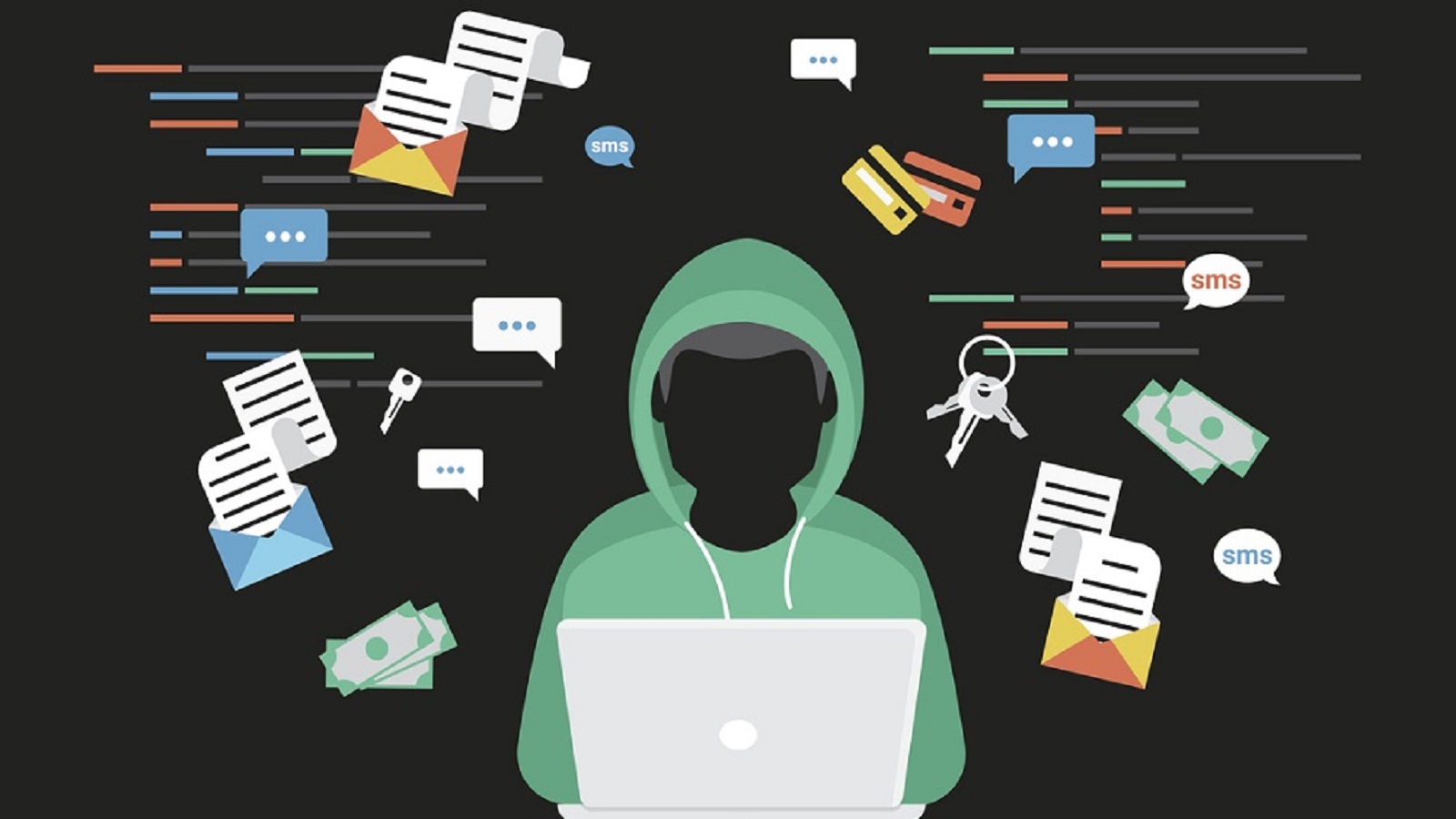
In an age where data flows like water and digital transactions occur at the speed of light, the business landscape has transformed into a sprawling, interconnected web. This connectivity has birthed unprecedented opportunities for growth, innovation, and global reach. A small artisan shop in a quiet village can now sell its crafts to customers in bustling metropolitan cities thousands of miles away. A startup with a handful of employees can leverage cloud computing to access the same powerful tools as a multinational corporation. Yet, this digital renaissance comes with a steep and often hidden price. Beneath the surface of seamless video calls, instant file sharing, and automated supply chains lurks a shadow world of digital predators. They do not come with masks and physical weapons; they arrive in the form of silent code, deceptive messages, and persistent probes against a company’s digital walls. The challenge of navigating this landscape is immense, and understanding how to shield an organization from modern Cybersecurity Threats is no longer the sole responsibility of a back-office IT technician. It is a fundamental pillar of survival, trust, and long-term prosperity.
For a business owner, the thought of a cyberattack often conjures images of a mysterious hacker in a dark room, typing furiously to crack complex codes. While such scenarios exist, the reality is frequently more mundane and more terrifying. It is the innocent-looking email from a supplier that carries a hidden payload. It is the unassuming USB drive found in the parking lot. It is the stressed employee who, in a moment of fatigue, clicks a link they should not have. The most sophisticated alarm system and the thickest vault door mean nothing if someone on the inside is tricked into opening them. Therefore, defending against Cybersecurity Threats is a holistic endeavor. It requires a marriage of cutting-edge technology, meticulous processes, and a profound shift in human behavior and culture. This is not a battle fought with firewalls alone; it is a continuous campaign to weave security into the very fabric of an organization’s daily operations, from the boardroom’s strategic vision to the breakroom’s casual conversations.
The True Anatomy of a Digital Onslaught
To defend a fortress effectively, one must understand the nature of the siege. A common misconception is that cyberattacks are primarily ultra-sophisticated operations targeting only financial giants or government databases. The truth is that small and medium-sized enterprises are often the preferred quarry. They are seen as the weak link in the supply chain, possessing valuable data but often lacking the robust defenses of a larger corporation. An attack is rarely a single, dramatic explosion. It is a process, a creeping infiltration that can be broken down into stages, each offering a window for a prepared business to detect and expel the intruder.
The initial breach is typically the most critical moment. It is the spear phishing email, meticulously researched and personalized, designed to bypass the rational brain and trigger an emotional click. It mimics an urgent request from a CEO, a shipping notification for a package we don’t recall ordering, or a fake invoice from a trusted vendor. This single, fleeting action by a well-meaning staff member can open a microscopic crack in the wall. Through this crack, a tiny piece of software, a downloader, establishes a quiet beachhead. It is a whisper in the digital noise, communicating with a distant command-and-control server, simply announcing, “I’m in.” From this point, the threat actor begins a silent reconnaissance, mapping the network, observing user behaviors, and locating the precious data stores. This period, known as the dwell time, can last for months. The attackers are patient. They do not want to trigger an immediate alarm. They are learning the business’s rhythm, its peak hours, its backup schedules.
The culmination of this silent occupation is the payload. This could be a ransomware attack, where every critical file is encrypted, and a demand for payment is splashed across every screen, turning years of intellectual property and customer trust into a hostage. Alternatively, it could be a quiet exfiltration of data, where sensitive client information, trade secrets, or financial records are siphoned off silently to be sold on the dark web or used for extortion. In either case, the result is a shattered business. The financial cost is staggering, encompassing not just the potential ransom but the forensic investigation, legal fees, regulatory fines, system downtime, and the devastating exodus of customers who no longer trust the brand. Recognizing this lifecycle is the first step in building a defense-in-depth strategy that assumes a breach will be attempted and plans to stop it at every turn.
Architecting the Human Firewall: The Vanguard of Defense
The most complex encryption algorithm and the most expensive intrusion detection system are powerless against a single uninformed decision. Technology is binary, predictable, and manageable. The human element is emotional, variable, and prone to error, yet it is the most dynamic and potent defense asset an organization can possess. Building a “human firewall” is the single most impactful investment a business can make to counteract Cybersecurity Threats. This is not a one-time seminar held in a stuffy conference room, followed by a sign-off sheet. It is a living, breathing cultural transformation.
The foundation of this human firewall is a continuous and engaging education program. The days of dry, technical presentations on password complexity are over. Effective training must be relatable, using real-world examples and storytelling to make the abstract threat concrete. Employees need to understand not just the “what” but the “why.” They must see themselves not as potential victims but as essential guardians of the company’s livelihood, their colleagues’ jobs, and their customers’ privacy. This training must evolve beyond simple red flags. It should simulate real phishing attacks, not as a “gotcha” exercise to punish those who click, but as a teachable moment to provide immediate, gentle feedback on the subtle clues they missed. It must delve into the psychology of social engineering—how attackers manipulate respect for authority, the fear of missing out, and the innate human desire to be helpful. A well-trained employee will pause, squint their eyes at a suspicious request from their “boss” demanding an urgent wire transfer or confidential document, and feel empowered to verify the request through a separate channel of communication. This moment of empowered hesitation is a victory.
This culture extends far beyond email. It encompasses physical security, reminding staff to challenge unescorted strangers in the office. It governs social media, where oversharing a job title and professional frustrations can give a spear-phisher the perfect ammunition for a targeted attack. It is about creating an environment of psychological safety where an employee who accidentally clicks a malicious link feels safe reporting it immediately, knowing their honesty will be met with support, not punishment. The speed of containment and response is directly proportional to the speed of detection and reporting. A culture of fear and blame guarantees that a small compromise will fester in the dark until it becomes a full-blown catastrophe. By fostering a sense of shared ownership and vigilance, a business turns every single employee from a potential vulnerability into a sentinel.
The Invisible Scaffolding: Policies, Access, and Digital Minimalism
If a human firewall is the vanguard, a meticulously crafted framework of policies and access controls is the invisible scaffolding that holds the entire defensive posture together. Without it, even the most well-intentioned employees are left to navigate a complex digital world without a map. These policies are not bureaucratic red tape; they are the clear, concise rules of engagement that transform abstract security principles into concrete daily actions. The most powerful concept in this framework is the Principle of Least Privilege, a philosophy of digital minimalism. It decrees that every user, application, and system should have only the absolute minimum level of access needed to perform its specific function, and for the shortest necessary duration. Why should a marketing intern’s account have the ability to access the company’s payroll database or confidential merger documents? Why does a third-party HVAC vendor need permanent, always-on access to the corporate network? The answer, in a secure architecture, is that they simply do not.
Implementing this principle requires a fundamental redesign of how we think about network access. It means moving away from a flat network where, once inside the perimeter, a user can roam freely. Instead, it demands network segmentation—creating secure digital compartments. If a compromise occurs in the marketing department, it is contained there, unable to spread laterally to the financial systems or the R&D vault. A breach is a fire, and network segmentation are the fire doors that stop it from consuming the entire building. This granular control must be tied to strict, role-based identity management. Every access right is a risk, and it must be regularly audited and justified. This is especially critical for what are often the weakest points in any organization’s digital armor: third-party vendors and partners. Their security is your security. A robust vendor management policy must require proof of their own cyber hygiene, monitor their connections with fine-toothed precision, and terminate access the instant a project is completed.
Equally critical is the governance of devices. The boundaries of the traditional office have dissolved. The cybersecurity perimeter is now defined not by the walls of a building, but by the security posture of every laptop, tablet, and smartphone accessing corporate data from a kitchen table, an airport lounge, or a hotel Wi-Fi network. Every device with a weak password, an outdated operating system, or a lack of encryption is a gaping hole in the perimeter. A clear policy on personal devices must be non-negotiable, enforced by technical controls, not just trust. This scaffolding of policies—from acceptable use and data classification to incident response and vendor management—takes the theoretical burden of security off the individual employee’s shoulders and codifies it into the predictable, automated, and non-negotiable systems of the business.
Mastering the Invisible Locks: The Art of Identity and Access
If data is the crown jewel, then identity is the master key. In the modern, perimeter-less digital world, the old model of a strong castle wall no longer applies. The fortress has become a busy, distributed city. The new perimeter is identity. The single most effective thing an organization can do to lock the doors to its digital estate is to implement robust authentication mechanisms and enforce them with ironclad consistency. Passwords, the old, creaky guards at the gate, have been a known vulnerability for decades. They are reused, shared, and stolen with ease. Relying on a password alone is a practice verging on negligence. The cornerstone of modern identity defense is Multi-Factor Authentication (MFA). It is the simple act of requiring something you know (a password) with something you have (a prompt on a mobile device or a physical security key). This single step, while not an impenetrable magic shield, stops the vast majority of automated credential-stuffing and password-spraying attacks in their tracks. It transforms a stolen password from a master key into a useless, incomplete fragment.
Yet, even MFA is just the beginning. The path forward is a bold one: the eradication of the password itself. The adoption of passwordless authentication, using biometrics or cryptographic keys tied to a device, represents a leap toward a future where there is simply nothing static to steal or phish. An attacker across the world cannot pull your fingerprint from a data breach. This journey requires a modern identity provider that can orchestrate single sign-on and enforce conditional access policies. These policies are the true intelligent guards. They do not simply ask, “Is the key correct?” They analyze the context: Is this login attempt coming from a known device? From a geographically impossible location? At an unusual hour? A login attempt with a valid password from a Moscow IP address for a user who was in the Chicago office twenty minutes earlier is not a legitimate access request; it is a screaming alarm. A context-aware access policy challenges that request with a higher form of MFA or blocks it outright, all silently and in real-time. By making identity the new control plane, a business achieves a state of secure, frictionless access for its legitimate users while creating an unnavigable labyrinth of invisible, adaptive locks for any adversary.
The Vigilant Eye: From Detection to the Golden Hour of Response
A mature security posture operates on an assumption that sounds pessimistic but is profoundly pragmatic: assume breach. This mindset acknowledges that despite every layered defense, a determined and well-resourced threat actor might eventually find a way in. The critical metric then shifts from prevention alone to speed—the speed of detection and the speed of response. The time between the initial breach and its discovery, the dwell time, is the golden hour for an attacker and a silent, bleeding wound for the business. The goal is to collapse that window from months to minutes. This requires replacing a reactive, alert-based model with a proactive, 24/7 hunting operation.
The foundation of this vigilance is comprehensive visibility. You cannot defend what you cannot see. Every server, workstation, network device, and cloud application must feed a constant stream of telemetry into a central nervous system, typically a Security Information and Event Management (SIEM) platform. But raw logs are just noise. The true power lies in fusing this data with threat intelligence—a real-time feed of the known indicators of compromise, attack patterns, and malicious infrastructure used by threat actors around the globe. This fusion allows for behavioral analytics. Instead of just looking for known malicious software signatures, the system learns the baseline of “normal.” It understands that the finance application server typically talks to the internal database server and never initiates connections to a residential IP address in a foreign country. When that anomalous connection attempt occurs, it is not just an alert; it is a high-fidelity signal that an adversary is attempting to exfiltrate data. A skilled human analyst or an automated orchestration system can then isolate that compromised server from the network in seconds, containing the threat before it can spread.
This rapid, decisive action in the golden hour is the hallmark of a resilient organization. It is orchestrated by a well-documented, regularly stress-tested incident response plan. This plan is not a dusty document on a shelf. It is a precise, living playbook that dictates exactly who does what, when, and how. It designates a clear chain of command, specifies the communication protocols—especially with legal counsel and a crisis communication firm to manage public relations—and outlines the technical steps for containment, eradication, and recovery. The single most critical decision in a ransomware scenario, for example, is not whether to pay the ransom, a deeply complex ethical, legal, and strategic dilemma with no easy answer. The first decision is whether the encrypted data can be restored from immutable, offline backups. A business that has perfected the art of backup, with isolated, tested, and completely immutable copies of its data, has already won the war. It can respond to the extortion attempt not with panic, but with the quiet confidence of a restoration procedure, transforming an existential crisis into a major operational inconvenience.
Securing the Future: The Cloud, AI, and the Unbreakable Spirit
The digital battleground is not static; it is a fluid, shape-shifting entity. As businesses race to embrace the agility of cloud computing, the Internet of Things (IoT), and the profound capabilities of Artificial Intelligence, they must do so with open eyes, weaving security into the fabric of these innovations from their very first blueprint. The old concept of “security by obscurity” is dead. The new paradigm is “security by design,” and it requires a fundamental shift in how technology is deployed.
The cloud is not inherently insecure, but it is an environment of shared responsibility. A catastrophic breach is almost always the result of a customer’s misconfiguration, not a cloud provider’s infrastructure failure. A carelessly configured Amazon S3 bucket left open to the public internet or an Azure database with overly permissive rules is not a flaw of the cloud; it is a human error, automated and scaled to a global stage. Protecting this new environment requires a cloud-native security posture, with tools that can automatically scan infrastructure-as-code templates for vulnerabilities before a single virtual machine is ever created. It demands a policy engine that can continuously monitor the live environment and instantly remedy any deviation from the secure baseline, such as an engineer inadvertently opening a port to the world for a “quick test” and forgetting to close it.
Artificial intelligence is the latest and most transformative weapon to be deployed by both sides of this conflict. For the defender, AI is a force multiplier that can finally tilt the odds. It can analyze terabytes of network traffic and identify subtle, low-and-slow attacks that would be invisible to a human analyst. It can predict vulnerabilities and automate the patching process, closing the window of exposure before an exploit can be weaponized. However, for the attacker, AI is a tool of chilling efficiency. It can craft flawless, personalized phishing emails in perfect, native-level language, erasing the tell-tale grammatical errors. It can generate convincing deepfake audio of a CEO’s voice for a fraudulent phone call. The fight is now one of algorithm against algorithm, and the defender must be equipped with tools that learn and adapt at machine speed. But at the center of this escalating technological arms race, one thing must remain clear: the final, unbreakable layer of defense is not a piece of code. It is a resilient organizational spirit—a culture where security is everyone’s job, where leaders champion cyber hygiene, and where a business is prepared not just to prevent failure, but to bend and not break under the pressure of an inevitable attack. This is the journey from a fragile, brittle security posture to a truly resilient, antifragile enterprise, one that is built to survive and thrive in the age of the permanent cyber threat.
The path forward is not paved with a single silver bullet but with a thousand disciplined steps. It is a path of continuous, deliberate improvement, relentless vigilance, and a profound respect for the value of the data a business has been entrusted to protect. The shield against cybersecurity threats is not a product you buy; it is a living system you build, nurture, and embody. It is the ultimate expression of a promise made to every customer, partner, and employee: that their trust is a treasure worthy of the most formidable fortress, a fortress built of people, process, and technology, standing guard against the endless digital night.