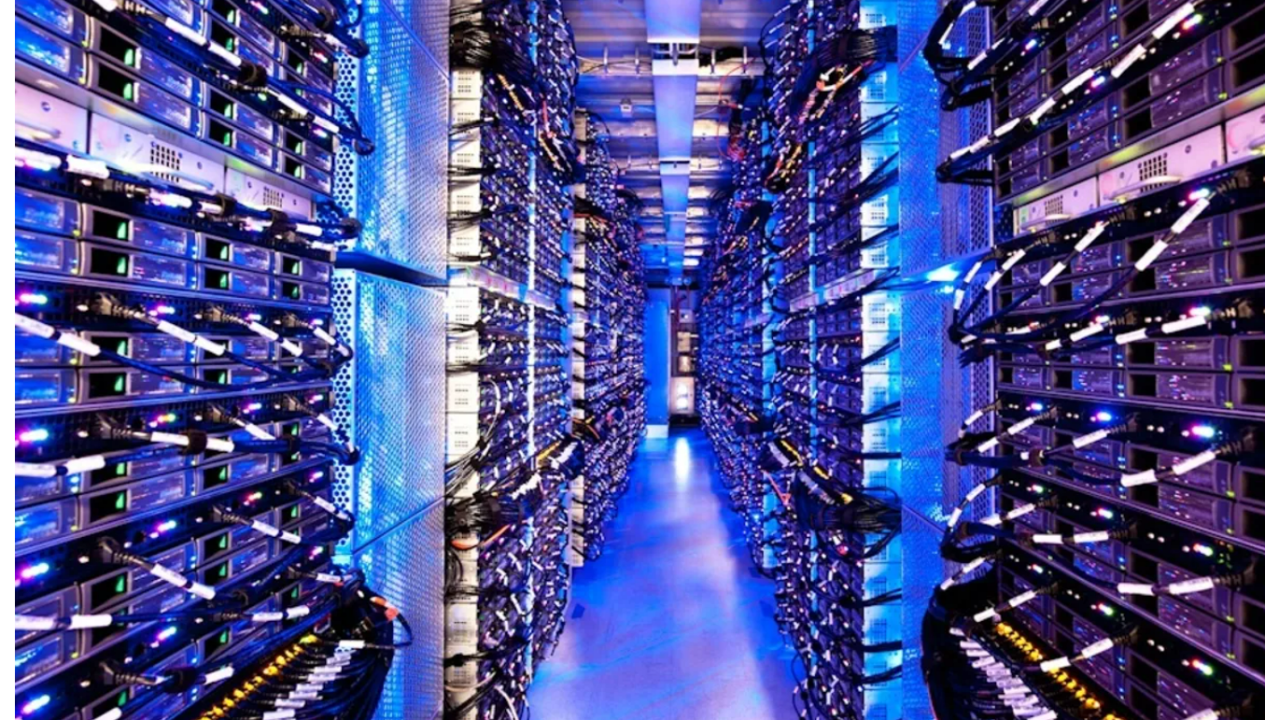
The answer is not monolithic. It is a complex tapestry woven from threads of explosive technological demand, a fundamental shift in corporate information technology strategy, the relentless pursuit of superior digital experiences, and a new understanding of data as a raw material. This is a story about the physical structures that underpin our increasingly intangible digital lives. We are generating information at a rate never before seen in human history. Every photograph captured on a smartphone, every video streamed, every financial transaction processed, every collaborative document edited, every artificial intelligence query generated—it all needs a physical place to live, to be processed, and to be sent back out into the world at the speed of light. The corporate giants are not just preparing for the future; they are building its foundations, brick by digital brick, right now. This massive deployment of financial resources signifies a deep-seated conviction that the future of commerce, communication, and innovation will be built on a bedrock of computational power, and they are racing to ensure they own that bedrock.
The Exponential Explosion of Digital Information
To understand the sheer scale of this investment, one must first grasp the tsunami of information that defines our age. We have moved beyond the era of megabytes and gigabytes into the age of zettabytes. A single zettabyte is a trillion gigabytes, a number so large it defies easy comprehension. To put it in perspective, if a gigabyte were a grain of sand, a zettabyte would be an entire beach, stretching for miles. Global data creation is projected to grow exponentially over the next decade, doubling every two to three years. This isn’t just coming from people posting on social media or sending emails. The major drivers are more profound and automated.
Consider the modern automobile. A single connected car can generate multiple terabytes of data every single day from its sensors, cameras, and onboard diagnostics. An autonomous vehicle, in its testing phase, generates a colossal 40 terabytes for every eight hours of driving. Multiply that by the hundreds of millions of vehicles on the road, and the data creation is astronomical. Similarly, a modern commercial jet engine produces hundreds of terabytes of operational data on a single transatlantic flight. Smart factories, equipped with thousands of Industrial Internet of Things sensors, generate a continuous stream of information about temperature, vibration, pressure, and production speed. Smart cities monitor traffic, air quality, energy grids, and water systems in real time. Precision agriculture uses drones and soil sensors to generate data that optimizes crop yields down to the square meter. All of this data—from the engine in the sky to the sensor in the soil—needs to be ingested, stored, processed, and analyzed. This is the first and most fundamental answer to why major companies are Investing in Data Centers. There is simply no other place for this overwhelming volume of information to reside. The cloud, a term we use for ethereal convenience, is a very physical place, and these companies are in a fierce land grab to build it.
The Insatiable Hunger of Artificial Intelligence
If the general growth of data is a steady, rising tide, then the advent of mainstream artificial intelligence is a tsunami crashing onto the shore. The recent breakthroughs in generative AI, large language models, and advanced machine learning have fundamentally rewritten the rules of computing. AI is not just another software application; it is a workload of a fundamentally different nature, and its appetite for computational resources is voracious and unique. Training a state-of-the-art foundation model, like a large language model that can understand and generate human-like text, requires clusters of tens of thousands of specialized processors, such as Graphics Processing Units, running in perfect harmony for weeks or months without interruption. This is not a task a traditional enterprise data center can handle.
These AI training clusters consume staggering amounts of electricity and generate immense heat, demanding a complete rethinking of data center design. Traditional air-cooling methods are often insufficient. The result is a massive pivot towards advanced liquid cooling, where coolant is piped directly to the processors, and radically new power distribution architectures to handle the density of up to 100 kilowatts per server rack, compared to the 5-10 kilowatts of a traditional setup. The major cloud providers and a new breed of specialized AI infrastructure companies are leading the charge, Investing in Data Centers purpose-built for this new reality. They are not merely adding a few more servers; they are constructing massive, dedicated AI supercomputing zones within their facilities. The economic incentive is clear: the company that provides the most powerful, efficient, and scalable AI infrastructure will become the central utility for the next generation of innovation. Every enterprise, from a bank creating a fraud-detection model to a pharmaceutical company simulating molecular interactions for new drugs, will need access to this kind of raw computing power, and they will rent it from the owners of these new-generation data centers.
The Unstoppable Migration to the Cloud and a Historic IT Transformation
For decades, the default model for corporate information technology was one of private ownership and direct management. A bank, a retailer, or a manufacturer would build its own server room, buy its own hardware, install its own software, and hire a team to keep it all running. This was a model of capital-intensive, siloed infrastructure that often ran at low utilization rates. The cloud computing revolution, pioneered over the last fifteen years, offered a compelling alternative: compute as a utility, paid for by the minute or by the hour, with the ability to scale up or down instantly. This is no longer a niche trend; it is a historic, one-way migration that is now entering its deepest phase.
Large, risk-averse organizations—government agencies, healthcare systems, and the world’s largest financial institutions—are no longer asking if they should move to the cloud, but how fast and how deeply they can. This “enterprise migration” is the single biggest driver of data center capacity demand. An entire generation of mission-critical applications, from mainframe-based banking systems to hospital record databases, is being refactored and lifted into the cloud. This is not a simple matter of copying files. It involves rebuilding applications to be cloud-native, taking advantage of microservices, containerization, and managed databases. The destination for this mass migration is the hyper-scale data centers owned by the major cloud providers. These are not just bigger versions of old corporate server rooms. They are the infrastructure that powers the cloud, and their expansion is a direct reflection of corporate balance sheets around the world shifting from a capital expenditure model to an operational expenditure one. The phrase Investing in Data Centers, in this context, describes the cloud providers’ massive capital outlay to capture this generational shift in how all global business operates.
Securing Digital Assets in a World of Escalating Threats
In a world of persistent and sophisticated cyber threats, digital resilience is not just a technical concern; it is a cornerstone of corporate survival and a significant catalyst for infrastructure investment. For a global enterprise, a data center is a vault containing its most precious assets: intellectual property, customer information, financial records, and the operational code that runs its business. Protecting these assets requires a fortress approach that is beyond the means of almost any single corporation to build for itself. This has elevated the physical security, network architecture, and operational protocols of major data center campuses to the level of critical national infrastructure.
Modern data center campuses feature a multi-layered security apparatus that begins at the perimeter and extends deep into the server rack. This includes ballistic-grade fencing, man-trap entry portals, multi-factor biometric authentication including retinal and fingerprint scanning, 360-degree high-resolution surveillance analyzed by AI for anomaly detection, and 24/7 armed security personnel. Beyond physical threats, the network security is equally formidable, with providers offering protection against massive Distributed Denial of Service (DDoS) attacks that can scrub malicious traffic at the network edge before it ever touches a customer’s application. The compliance certifications alone—for standards like ISO 27001, SOC 2 Type II, PCI-DSS for payments, and HIPAA for healthcare—represent a multi-million-dollar investment in rigorous, continuous auditing. This is a powerful answer to why major companies are Investing in Data Centers as a primary strategy. They are not just buying floor space and power; they are buying a comprehensive, pre-certified security and resilience posture that acts as a powerful shield, transferring a colossal burden of risk from the enterprise to the infrastructure provider.
The Strategic Imperative: Latency, the Speed of Business
The digital economy operates in milliseconds. The time it takes for a data packet to travel from a user’s device to a server and back—known as latency—is the difference between a seamless, immersive experience and a frustrating, lag-filled one that drives customers to a competitor. This has moved data center location from a technical footnote to a primary competitive weapon. The dream of a borderless, location-independent internet collides with the hard reality of the speed of light, which, while fast, creates a physical limit over long distances. An executive in London conducting a video conference with a team in Hong Kong will experience a noticeable and disruptive delay if the processing hub is located in Virginia. A high-frequency trading algorithm that is a microsecond slower than a competitor’s can lose millions of dollars in a single day.
This is the driver behind the concept of the “edge,” which is becoming the next great frontier for data center investment. The core, hyperscale facilities in central Washington or Iowa are being complemented by a distributed layer of smaller, city-state and neighborhood-level data centers that bring computation physically closer to the user. This edge infrastructure is essential for the next wave of technological experience. A seamless cloud gaming session where high-fidelity graphics are rendered remotely and streamed to a simple screen requires a round-trip latency of under 20 milliseconds. A stable, high-quality virtual reality or augmented reality overlay requires sub-10-millisecond latency to prevent motion sickness and make digital objects feel fixed in the real world. Achieving this means service providers must be Inside every major population center. Consequently, major tech companies are Investing in Data Centers not just in a few massive locations but in dozens of interconnected points of presence around the globe, creating a dense mesh of computing power that wraps around the planet, ensuring that the digital service is always just down the street, not across an ocean.
Navigating the Complex Web of Data Sovereignty
While the technical drivers of data growth and latency are powerful, they are matched by a regulatory force that is reshaping the global map of digital infrastructure: data sovereignty. Governments worldwide are enacting strict laws that dictate where their citizens’ data can be stored, processed, and transacted. The era of a global, borderless internet is fragmenting into a patchwork of national and regional jurisdictions, and data is the new bordered asset. The European Union’s General Data Protection Regulation was the trailblazer, setting strict rules for the processing of personal data, but it is now one model among many. Countries from India and China to Brazil and Saudi Arabia have enacted or are drafting laws that require certain categories of data—particularly financial, health, and personal identification data—to remain physically within their national borders.
This regulatory landscape makes a global, one-size-fits-all cloud strategy impossible for multinational corporations. A company operating in thirty countries cannot simply put all its European customer data in a data center in the United States. It must have a physical cloud infrastructure presence within that specific legal jurisdiction. This single legal fact has made Investing in Data Centers a non-negotiable requirement of international business, forcing the major cloud providers to embark on a global construction spree. They are rapidly building new cloud regions—clusters of multiple, isolated data centers—in specific political geographies, from Zürich and Milan to Hyderabad and Jakarta. Each new region is a multi-hundred-million-dollar declaration that a company intends to serve that country’s digital economy while adhering to its laws. It is a physical manifestation of a legal compact, turning sovereign borders into blueprints for billion-dollar construction projects.
The Drive for Sustainability and a Greener Grid
On the surface, the massive energy consumption of data centers presents a stark environmental challenge. Data centers globally are projected to consume a significant percentage of the world’s electricity, making their sustainability a critical planetary concern. However, this challenge is simultaneously one of the most powerful forces driving new investment. The public commitments by major technology companies to be carbon-negative and water-positive by the end of this decade are not just aspirational marketing; they are binding strategic directives that dictate every facet of their infrastructure expansion. This has transformed the largest tech firms into the world’s most significant corporate purchasers of renewable energy, fundamentally reshaping energy markets and data center design.
This drive for sustainability is a key component of the strategy behind Investing in Data Centers. A new facility today is a multi-billion-dollar, clean-energy project as much as it is a digital one. In regions like the Nordics, data centers are being integrated with district heating systems, where the waste heat from the servers is piped to warm thousands of nearby homes and businesses, turning a cost into a community asset. In water-scarce regions, providers are pioneering water-free cooling technologies, using advanced liquid immersion or closed-loop systems that don’t consume drinking water. They are also deploying massive, on-site battery energy storage systems, serving a dual purpose: smoothing out the intermittency of solar and wind power and reducing reliance on diesel generators for backup. The investment logic is to build a fleet of facilities that are not only computational powerhouses but also positive actors on the electric grid and in the local environment. A data center that runs on 100% carbon-free energy, hour by hour, is a premium asset, attracting sustainability-focused corporate clients and future-proofing the business against inevitable carbon taxes and stricter environmental regulations.
The Economic Reality of Hyperscale and the Decline of the DIY Server Room
The sheer scale of modern data center investment is creating an insurmountable economic moat between the hyperscale providers and the traditional enterprise. The law of hyper-scale economics dictates that as you grow, the cost per unit of computing power plummets, creating a virtuous cycle that smaller players cannot match. When Microsoft, Amazon, or Google negotiate for hundreds of thousands of custom-designed servers, solid-state drives, and networking switches directly from manufacturers, they achieve a price point that is a fraction of what a single enterprise pays for a handful of off-the-shelf machines. They design their own silicon, stripping out unnecessary components to maximize efficiency for their specific workloads.
This scale extends to every layer of the stack. A hyperscale facility is the most efficient building of its type in the world, achieving a Power Usage Effectiveness near a theoretical perfect score of 1.0, meaning almost all the electricity coming into the building is used for computing, not for cooling or power conversion losses. A typical on-premise enterprise data center struggles to get a PUE below 1.7. This huge gap in energy efficiency directly translates into a lower cost of operation. Furthermore, the hyperscalers can deploy software-defined infrastructure, automating maintenance, patching, and security across millions of machines. A single engineer can manage thousands of servers, whereas a traditional IT department might manage only a few hundred. This economic reality explains the “why” of the investment from a demand perspective. A CFO of a Fortune 500 company looking at the costs of modernizing their own aging, inefficient data center against the price and capability of a cloud contract does not see a close comparison. The decision to shutter the corporate data center and migrate to hyperscale is one of pure economic rationality, and that mass migration is the demand signal that fuels the global investment cycle.
Beyond Real Estate: Data Centers as Critical Financial Infrastructure
For the financial titans of the world—the massive asset managers, pension funds, sovereign wealth funds, and private equity firms—the digital gold rush is not just a fascinating tech trend; it is a defining investment theme of the twenty-first century. These institutional investors, managing trillions of dollars in capital, are increasingly viewing data centers not as niche real estate plays but as the foundational infrastructure of the global economy, akin to cell towers, ports, or toll roads. They are moving vast pools of capital away from traditional assets like shopping malls and office buildings and towards the digital infrastructure that is rendering those old-world assets obsolete.
This influx of institutional capital is a major accelerant, turbo-charging the industry’s growth. The investment thesis is compelling and long-term in nature. A data center, once built and leased on a 10- to 15-year contract to a blue-chip cloud provider or a multinational corporation, provides a highly predictable, contractual, and bond-like cash flow stream, often with built-in escalation clauses. These are seen as “mission-critical” assets; a corporate tenant will vacate an office long before they will shutter their core IT infrastructure. For investors seeking long-duration, inflation-hedged assets, a hyperscale data center is an ideal vehicle. This is why some of the most conservative stewards of capital on the planet are now aggressively Investing in Data Centers. They are partnering with developers and operators to fund new campus construction, taking a long-term view that the world’s appetite for data is non-negotiable and uncapped. Their participation is not just providing funding; it is industrializing the sector, bringing sophisticated financial engineering and creating a liquid market for digital assets that accelerates the pace of global development far beyond what even the largest tech companies could self-fund.
Conclusion: Cementing the Foundations of Tomorrow’s Reality
The vast, humming campuses of data centers sprouting across the globe represent far more than a simple expansion of corporate infrastructure. They are the physical consequence of a profound civilizational shift, the brick-and-mortar response to a world that has re-architected itself around a core of software and data. The question of why major companies are Investing in Data Centers finds its answer not in a single trend, but in a powerful convergence of them. It is the explosion of machine-generated information, the insatiable computational hunger of artificial intelligence, the exodus from private server rooms to the public cloud, the unforgiving physics of latency, the hard legal boundaries of data sovereignty, and the economic imperatives of both hyperscale efficiency and financial asset re-allocation.
These facilities are not just places where servers are housed; they are the nerve centers of a new global operating system, the refineries of the digital age that process the raw material of data into the actionable intelligence, automated services, and immersive experiences that increasingly define our daily existence. The race to build them is a high-stakes battle to control the foundational layer of the modern economy, a layer upon which every other industry—from medicine to manufacturing to entertainment—will depend. The capital being deployed today is a bet of trillions of dollars that the future will be defined not by what we can build with our hands, but by what we can compute with our minds and the machines we create. These windowless buildings, pulsing with light and energy on the outskirts of our cities, are the silent, steadfast engines writing the code for the next century, and the investment pouring into them is the single greatest physical manifestation of our digital destiny.