Hastelloy B2 Plate vs B3 Plate: What’s the Difference?
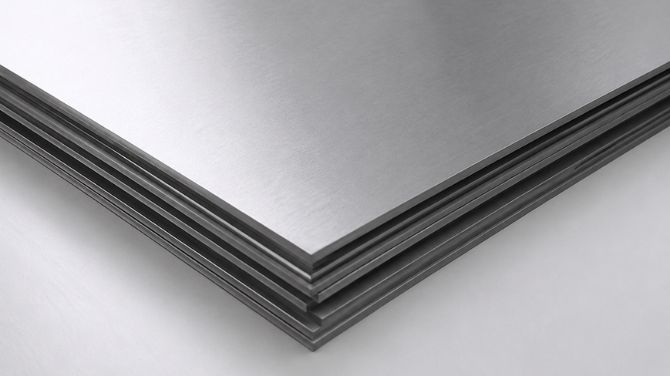
Nickel-molybdenum alloys built for reducing acid service rarely get simpler than the Hastelloy B family. Hastelloy B2 Plate and Hastelloy B3 Plate both resist hydrochloric acid, sulfuric acid, and other aggressive reducing media at concentrations that damage standard stainless steel within hours. The molybdenum content, sitting near 28% in both grades, drives that resistance. Where they part ways is composition control and thermal stability. Choosing between Hastelloy B2 Plate and B3 Plate depends on the corrosion environment, weld exposure, and fabrication schedule.
In this article
What Are Hastelloy B2 and B3 Plates?
Hastelloy B2 Plate
UNS N10665 carries roughly 26-30% molybdenum with tightly controlled carbon and silicon levels. This composition holds up against hydrochloric acid across the full concentration range, right up to the boiling point, without the pitting or crevice attack that chromium-bearing alloys suffer in chloride environments. Sulfuric acid, phosphoric acid, and acetic acid at reducing conditions all fall within its service range. Chemical processing plants have specified this grade for decades precisely because it does not depend on a passive oxide layer to survive.
Hastelloy B3 Plate
UNS N10675 keeps the same molybdenum base but adds small, controlled amounts of chromium and tungsten, along with tighter iron limits. Metallurgists developed this grade specifically to address a weakness in B2: grain-boundary precipitation after heat exposure. B3 resists that precipitation far better, which means welded joints retain more of their corrosion resistance without a mandatory post-weld solution anneal in every case. For fabricators running multiple weld passes or working with thicker sections, that stability changes the whole project timeline.
 Also readHow Early U.S. Couples Start Shopping for Engagement Rings Before the Proposal
Hastelloy B2 Plate vs B3 Plate: Key Differences
The two alloys share a corrosion resistance base but diverge on a few practical points:
- Molybdenum and alloying control: B2 relies on molybdenum alone for its resistance profile. B3 adds chromium and tungsten in small percentages to stabilise the microstructure during and after welding.
- Grain-boundary precipitation: B2 is prone to secondary-phase precipitation when held between 1200°F and 1800°F, a range that welding routinely passes through. B3 was engineered specifically to resist this.
- Post-weld treatment: B2 plates typically need solution annealing after welding to restore full corrosion resistance in the heat-affected zone. B3 reduces, though does not always eliminate, this requirement.
- Ductility and fabrication: B3 usually provides better ductility in forming and bending, which helps with complex vessel geometries.
- Cost and availability: B2 remains the more established grade with a longer supply history, and pricing often reflects that.
Neither alloy replaces the other outright. B2 continues to perform reliably in simple reducing-acid service where welding is limited, while B3 earns its place on projects involving heavy fabrication or repeated thermal cycling.
Applications of Hastelloy B2 and B3 Plates
Common Hastelloy B2 Plate Applications
- It is used in chemical processing equipment because it can withstand corrosive service conditions.
- It is used in reactors where resistance to harsh chemicals is required.
- It is used in heat exchangers that operate in corrosive environments.
- It is used in piping components that must handle aggressive process fluids.
- It is used in acid-handling equipment because it offers strong resistance to acid attack.
Hastelloy B3 Plate Applications
- It is used in chemical reactors for service in corrosive chemical environments.
- It is used in process vessels that require reliable corrosion resistance.
- It is used in heat exchangers exposed to aggressive process conditions.
- It is used in acid processing systems because it performs well in highly corrosive media.
- It is also used in equipment exposed to elevated temperatures and aggressive reducing environments.
Where to Buy Hastelloy B3 Plate?
Preston Pipes and Alloys supplies Hastelloy B3 Plate to chemical processing and industrial clients across India and abroad. Our company has been based in Mumbai since 2003 and procures plates as per standard-compliant specifications and tests each batch before dispatch. If the wholesaler is also exporting, it means there is less mediation between the mill and the project site, which can lead to shorter lead times and consistent documentation. The team handles bulk orders for large fabrication contracts as well as smaller cut-to-size jobs for maintenance work. You will have direct access to experienced procurement people.
Conclusion
Hastelloy B2 Plate and B3 Plate offer reliable resistance to hydrochloric acid and other reducing chemicals, but which one is best depends on your welding and heat exposure. B2 is good for simpler, less fabrication intensive applications. B3 is better with multiple weld passes and thermal cycling. Contact Preston Pipes and Alloys to check current stock and quote your plate thickness and grade.

Covers business ideas, small business finance and technology for Business Recorder.