Stainless Steel Bars: A Complete Guide to Types, Uses & Applications
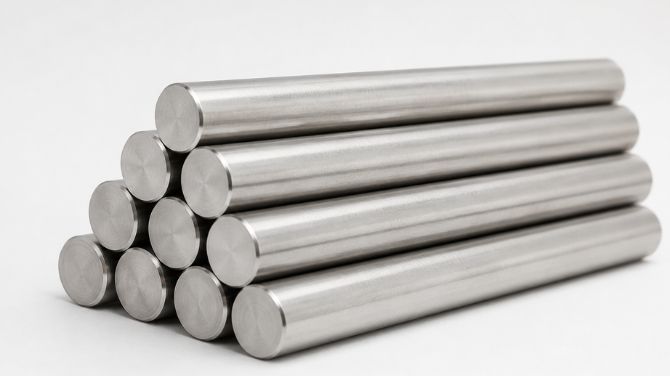
Stainless steel bars are solid metal stock used across nearly every branch of industrial fabrication, valued for a combination that few other materials match: corrosion resistance, strength, durability, and machinability all in one product. They come in several forms, round, flat, square, and hexagonal, each suited to a different kind of component or fabrication job. This guide covers the major bar types, common grades, typical uses, and the factors that actually shape a selection decision on a real project.
In this article
What Are Stainless Steel Bars?
Stainless steel bars are manufactured from stainless steel alloys containing chromium along with other alloying elements, and that chromium content is what gives the material its defining property. Chromium forms a thin oxide layer on the surface that resists rust and corrosion far better than plain carbon steel manages alone. The main difference between bars and pipes, tubes and rods is the cross-sectional shape and application. Stainless steel bars are usually delivered in solid form, pipes and tubes in hollow cross-sections and rods are normally offered as smaller diameter solid items. This makes bars well suited for structural members, shafts, fasteners, machined parts and other uses requiring a solid section of metal.
Depending on the finish and tolerances required by the project it is produced via hot-rolling, cold-drawing, forging or machining. Industrial stainless steel bars can be produced in different diameters, finishes, cross-sections, and tolerances thanks to the production procedures. This makes them suitable for a wide range of applications in structural, engineering, fabrication and manufacturing areas.
 Also readHow Early U.S. Couples Start Shopping for Engagement Rings Before the Proposal
What Are the Different Types of Stainless Steel Bars?
Discover the main types of stainless steel bars and their ideal industrial uses.
Stainless Steel Round Bars
Round bars carry a circular cross-section and see heavy use in shafts, fasteners, and machined components where a rotating or symmetrical part is needed. They’re available across a range of grades and surface finishes to match different mechanical and aesthetic requirements.
Stainless Steel Flat Bars
Flat Bars are rectangular in cross section and are used in brackets, frames, and structural supports where a flat mounting surface or basic fabrication shape is preferable to a rounded profile.
Stainless Steel Square Bars
The four equal sides make square bars ideal for manufacturing, machinery frames and architectural applications which need clean, consistent edges to facilitate welding and assembly.
Stainless steel hex bars
The best machining efficiency is achieved with the six-sided geometry of hex bars that are commonly used for making bolts, nuts, fittings and other precision items. The hexagonal shape enables milling without material loss.
Common Stainless Steel Grades Used for Bars
Grade selection depends on corrosion resistance, strength, temperature exposure, machining requirements, and the specific environment a bar will operate in.
304 Stainless Steel Bars
A general-purpose grade with good corrosion resistance and formability, 304 covers fabrication, food processing, machinery, and general engineering work where extreme conditions aren’t a factor.
316 Stainless Steel Bars
316 adds meaningfully better resistance to chloride and marine environments, making it the practical choice for chemical processing, marine equipment, and other demanding industrial applications. Standard 304 wouldn’t hold up as well.
Other Stainless Steel Grades
303 suits machining-heavy applications where free-machining properties matter most. 310 handles high-temperature service where oxidation resistance is the priority. 410 offers higher hardness and strength for applications that need it, and 17-4 PH covers high-strength engineering work beyond what standard austenitic grades deliver.
Uses of Stainless Steel Bars
Stainless steel bars are one of the most versatile raw materials used to make durable parts for a variety of demanding applications. Their high strength, wear and anti-corrosive qualities provide long-term structural reliability and performance under various and harshest working situations. The following are some of the stainless steel bars uses:
- Machine shafts and moving mechanical elements require high wear resistance.
- Fasteners for corrosive situations. Bolts . Nuts and studs.
- Brackets and support components used in heavy-load frameworks.
- Fluid handling valves, high-pressure flow control equipment, and pipe fittings.
- Hygienic Food Processing Machine Parts and Surface Assembly Sanitary.
- Architectural hardware for decorative and structural building trim.
- Precision automotive components for high stress working situations.
- Equipment for chemical processing in aggressive and reactive environments.
Industrial Applications of Stainless Steel Bars
Stainless steel bars power critical industries, providing essential strength and corrosion resistance for demanding engineering applications.
Construction & Infrastructure
Structural supports, railings, and frames rely on stainless steel bar for strength combined with long-term corrosion resistance in exposed conditions.
Automotive & Engineering
Shafts, precision-machined parts, and fasteners depend on the material’s mechanical consistency across demanding operating conditions.
Chemical & Petrochemical
Components exposed to corrosive chemicals need a bar material that won’t degrade under sustained chemical contact.
Food & Pharmaceutical
Equipment in these industries requires hygiene, cleanability, and corrosion resistance that stainless steel delivers as a baseline property.
Marine Applications
Components exposed to moisture, seawater, and chloride-rich conditions call for grades like 316 that resist the specific corrosion mechanisms saltwater exposure creates.
Conclusion
Choosing the proper stainless steel bar is mostly a matter of matching shape, grade, and manufacturing method to the real-world requirements of the application, whether it’s a structural bracket, a precision-machined shaft, or a component for use in maritime operations. These bars are corrosion-resistant, strong, and machinable, making them a useful alternative in construction, automotive, chemical, food, and marine industries alike. Industrial buyers can easily source heavy-duty components through specialized B2B platforms like Piping Mart, which host trusted suppliers, manufacturers, and exporters.

Covers business ideas, small business finance and technology for Business Recorder.